A detailed guide to Army Rule 57 plea of no case, the prima facie test, special findings under Section 139 and Rule 62, reasons, trial strategy and AFT challenge.
Read MoreSummary General Court-Martial explained: convening power, composition, Rules 151–165, defence and counsel, evidence record, confirmation, Section 164 petition and AFT appeal.
Read MoreCourt martial legal representation explained: defending officer, friend of the accused, counsel, SCM legal adviser, preparation rights, denial, prejudice and AFT remedy.
Read MoreArmy Rule 22 governs the hearing of charge by the Commanding Officer before further disciplinary action. This guide explains the accused’s rights, the Rule 180 exception, Summary of Evidence linkage and AFT consequences.
Read More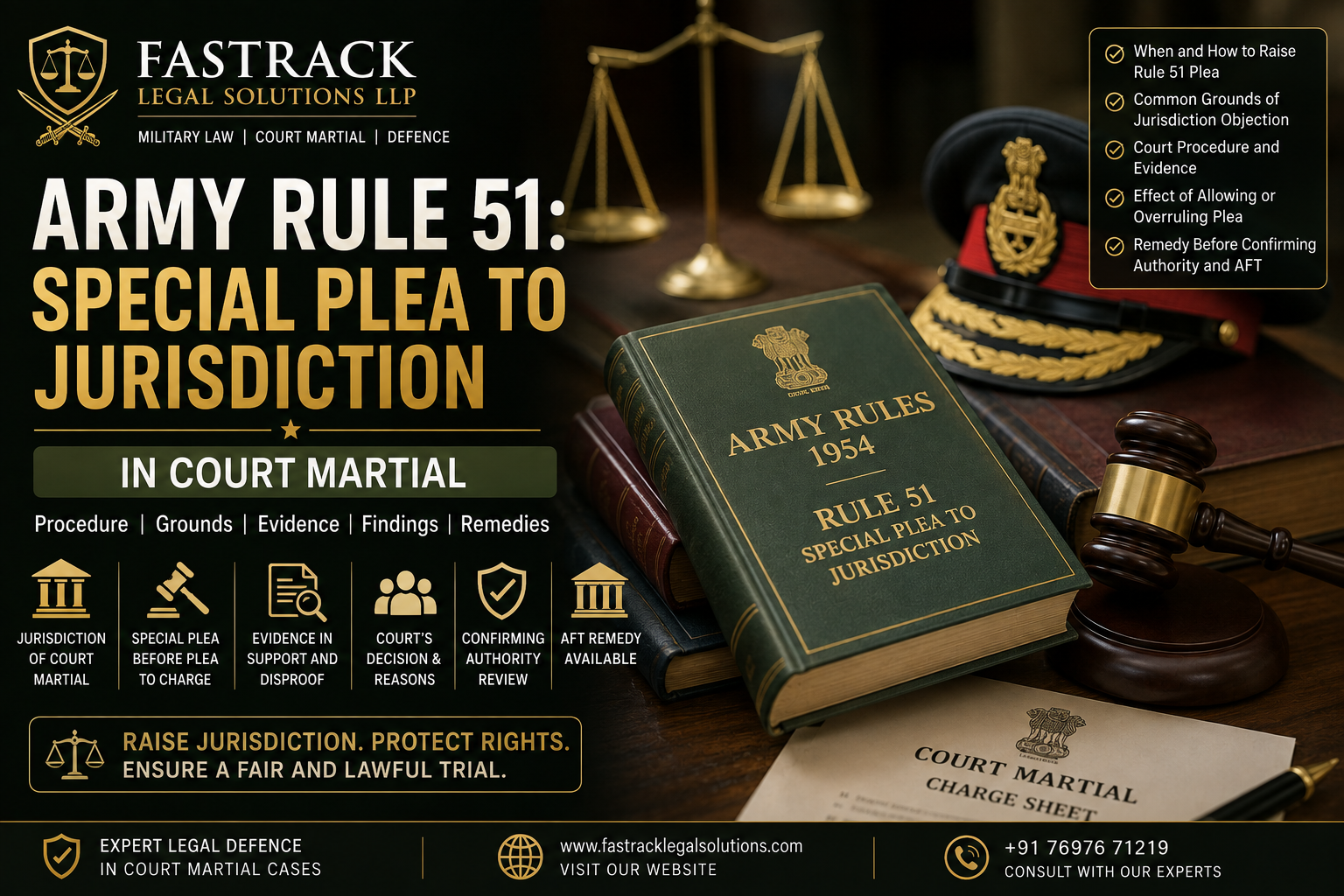
Army Rule 51 allows an accused, before pleading to the charge, to offer a special plea to the general jurisdiction of the Court-Martial. If the Court considers that the plea shows lack of jurisdiction, it must receive evidence in support of the plea, evidence from the prosecution in disproof or qualification, and hear addresses from...
Read More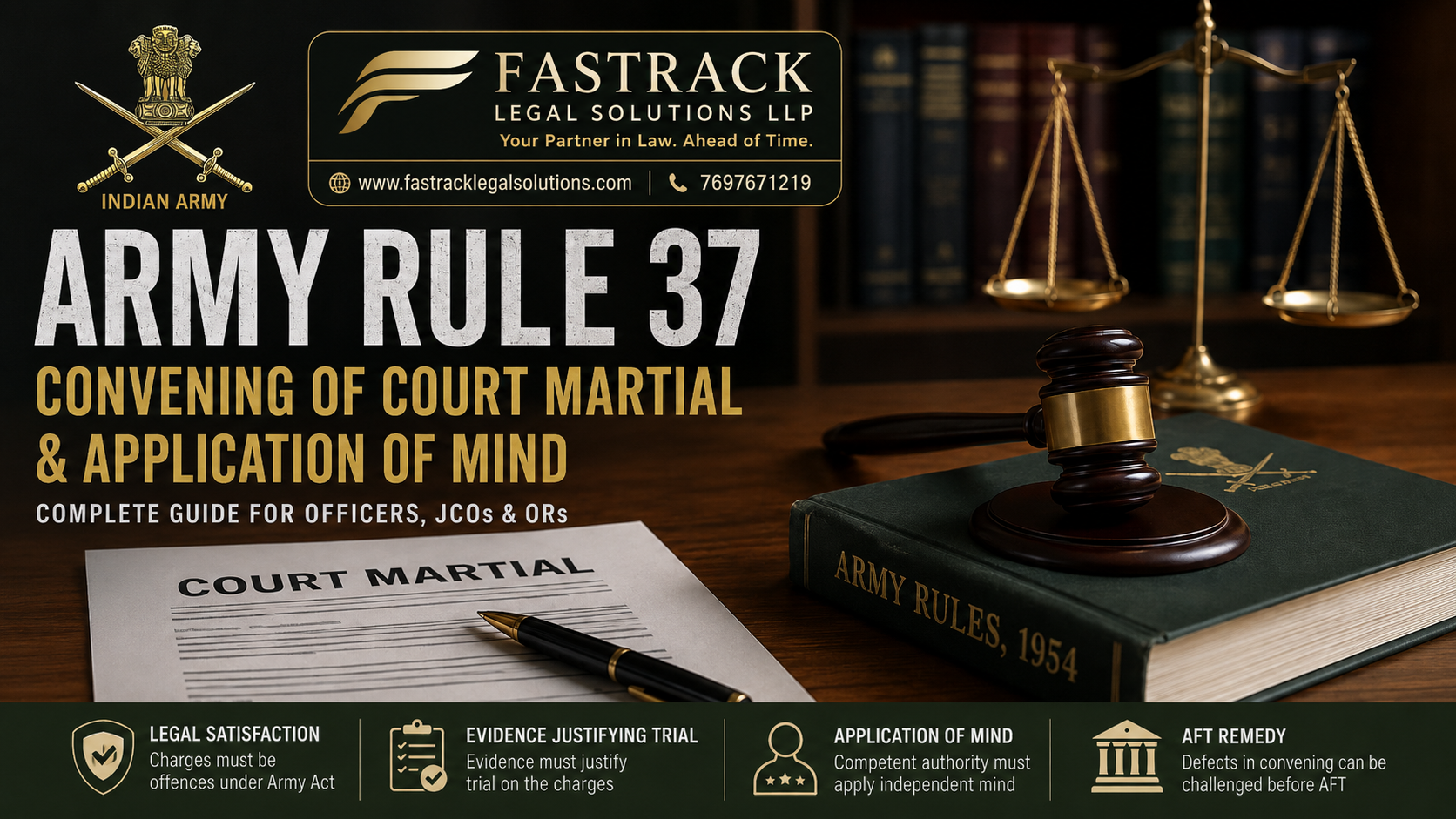
Army Rule 37 deals with the convening of General and District Courts-Martial. Before convening a General or District Court-Martial, the competent officer must first satisfy himself that the charges are offences within the meaning of the Army Act and that the evidence justifies a trial on those charges. If he is not so satisfied, he...
Read More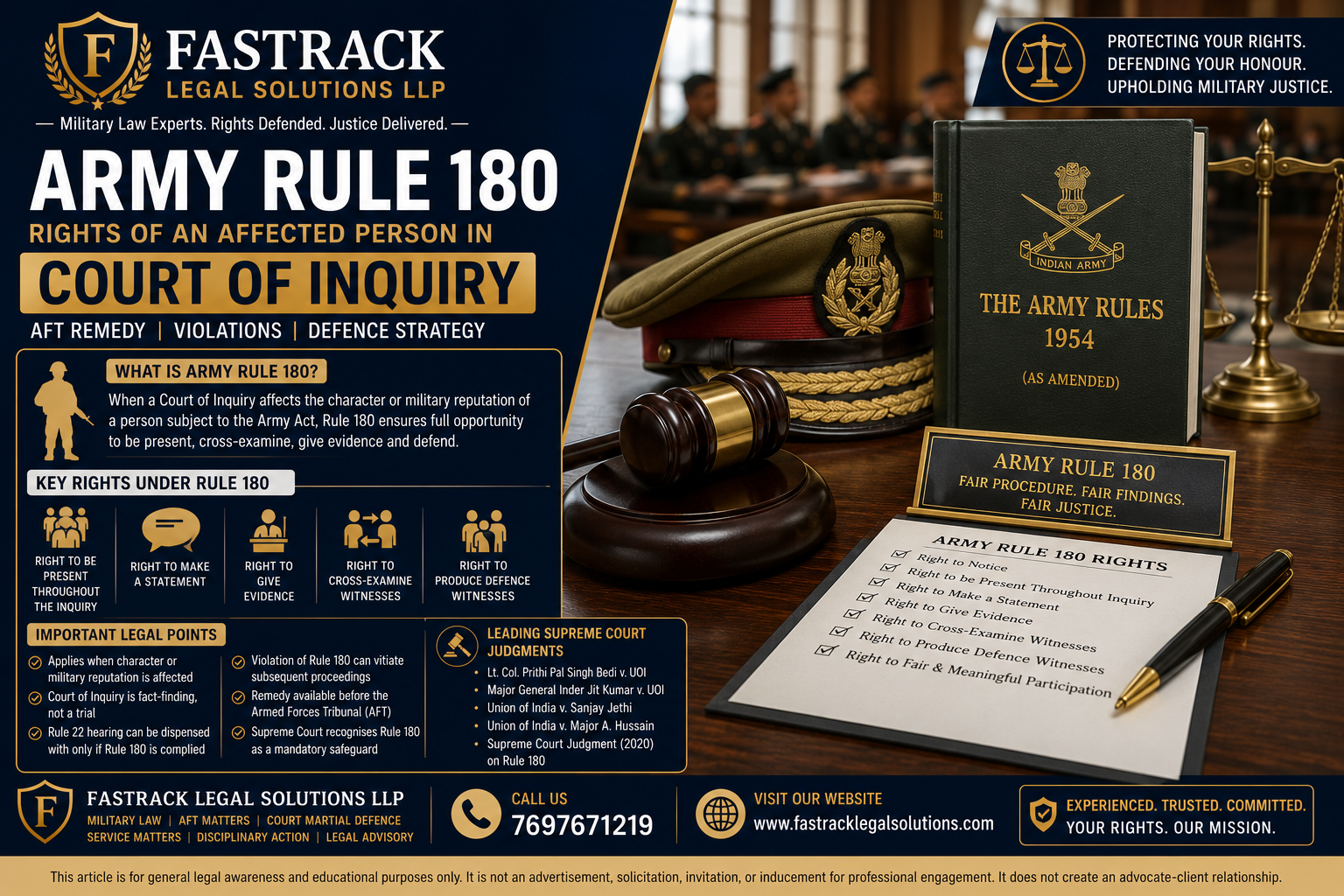
Army Rule 180 protects a person subject to the Army Act when a Court of Inquiry affects his character or military reputation. In such a case, the affected person must be given full opportunity to remain present throughout the inquiry, make a statement, give evidence, cross-examine witnesses whose evidence affects his character or military reputation,...
Read More