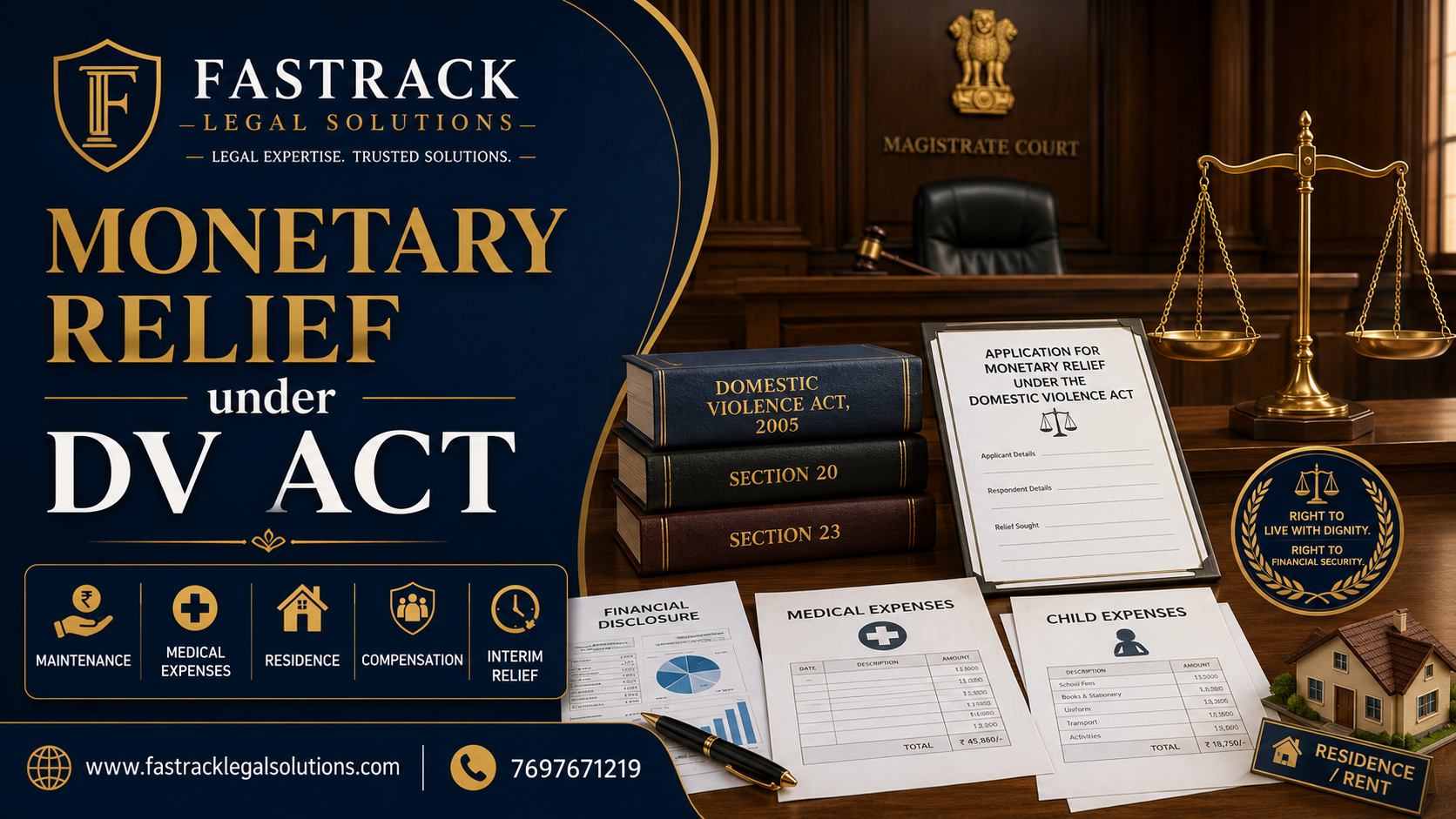
Monetary relief under Domestic Violence Act, 2005 is a financial remedy that may be granted by the Magistrate to meet expenses and losses suffered by an aggrieved woman and her child because of domestic violence. Under Section 20, monetary relief may include loss of earnings, medical expenses, loss caused by damage or removal of property,...
Read More
Permanent alimony under Section 25 of the Hindu Marriage Act, 1955 is financial support granted by the matrimonial court at the time of passing a decree or at any time after the decree. It may be awarded as a lump-sum amount, monthly payment, or periodical payment, and may be granted to either spouse depending on...
Read MoreInterim Maintenance under Section 24 of the Hindu Marriage Act, 1955 allows either the wife or the husband to seek maintenance pendente lite and expenses of proceedings during the pendency of matrimonial litigation. The provision is gender-neutral. The court may grant interim maintenance where the applicant has no independent income sufficient for their support and...
Read More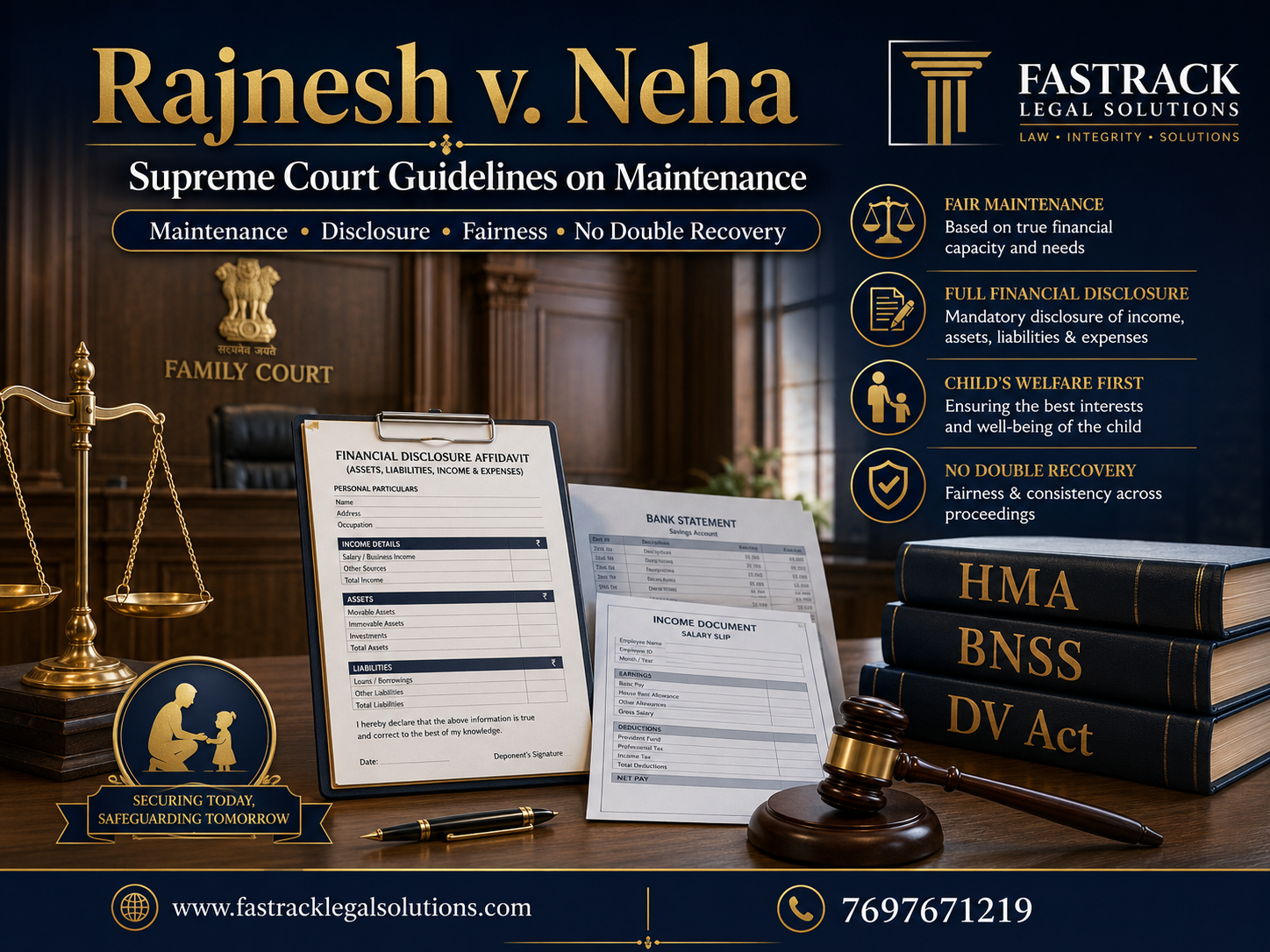
Rajnesh v. Neha, Criminal Appeal No. 730 of 2020, decided by the Supreme Court of India on 4 November 2020 and reported as (2021) 2 SCC 324, is a landmark judgment on maintenance in matrimonial disputes. The Supreme Court framed nationwide guidelines on financial disclosure, overlapping maintenance proceedings, interim maintenance, criteria for determining quantum, date...
Read MoreIn India, child custody is decided not on the superiority of the mother, father, or any relative, but on the welfare and best interest of the child. Courts examine the child’s age, education, emotional security, health, stability, parental conduct, financial capacity, moral environment, and, where the child is mature enough, the child’s preference. The law...
Read More