A divorce lawyer in Malviya Nagar, New Delhi may advise on matrimonial disputes involving mutual consent divorce, contested divorce, cruelty, desertion, maintenance, child custody, visitation, domestic violence proceedings, return of stridhan, settlement drafting and Family Court procedure. However, the correct court is not decided merely by the location of the lawyer’s office. Jurisdiction depends on...
Read More
Mental cruelty in divorce cases means conduct by one spouse that causes such mental pain, humiliation, emotional suffering or psychological injury that the other spouse cannot reasonably be expected to continue the marriage. Under Section 13(1)(ia) of the Hindu Marriage Act, 1955, cruelty is a ground for divorce. Mental cruelty may include false criminal complaints,...
Read More
Mental cruelty in divorce cases refers to conduct by one spouse that causes such mental pain, suffering, fear, humiliation, emotional distress or breakdown of trust that the other spouse cannot reasonably be expected to continue the matrimonial relationship. Under Section 13(1)(i-a) of the Hindu Marriage Act, 1955, cruelty is a ground for divorce. Mental cruelty...
Read More
Monetary relief under Domestic Violence Act, 2005 is a financial remedy that may be granted by the Magistrate to meet expenses and losses suffered by an aggrieved woman and her child because of domestic violence. Under Section 20, monetary relief may include loss of earnings, medical expenses, loss caused by damage or removal of property,...
Read More
Permanent alimony under Section 25 of the Hindu Marriage Act, 1955 is financial support granted by the matrimonial court at the time of passing a decree or at any time after the decree. It may be awarded as a lump-sum amount, monthly payment, or periodical payment, and may be granted to either spouse depending on...
Read MoreInterim Maintenance under Section 24 of the Hindu Marriage Act, 1955 allows either the wife or the husband to seek maintenance pendente lite and expenses of proceedings during the pendency of matrimonial litigation. The provision is gender-neutral. The court may grant interim maintenance where the applicant has no independent income sufficient for their support and...
Read More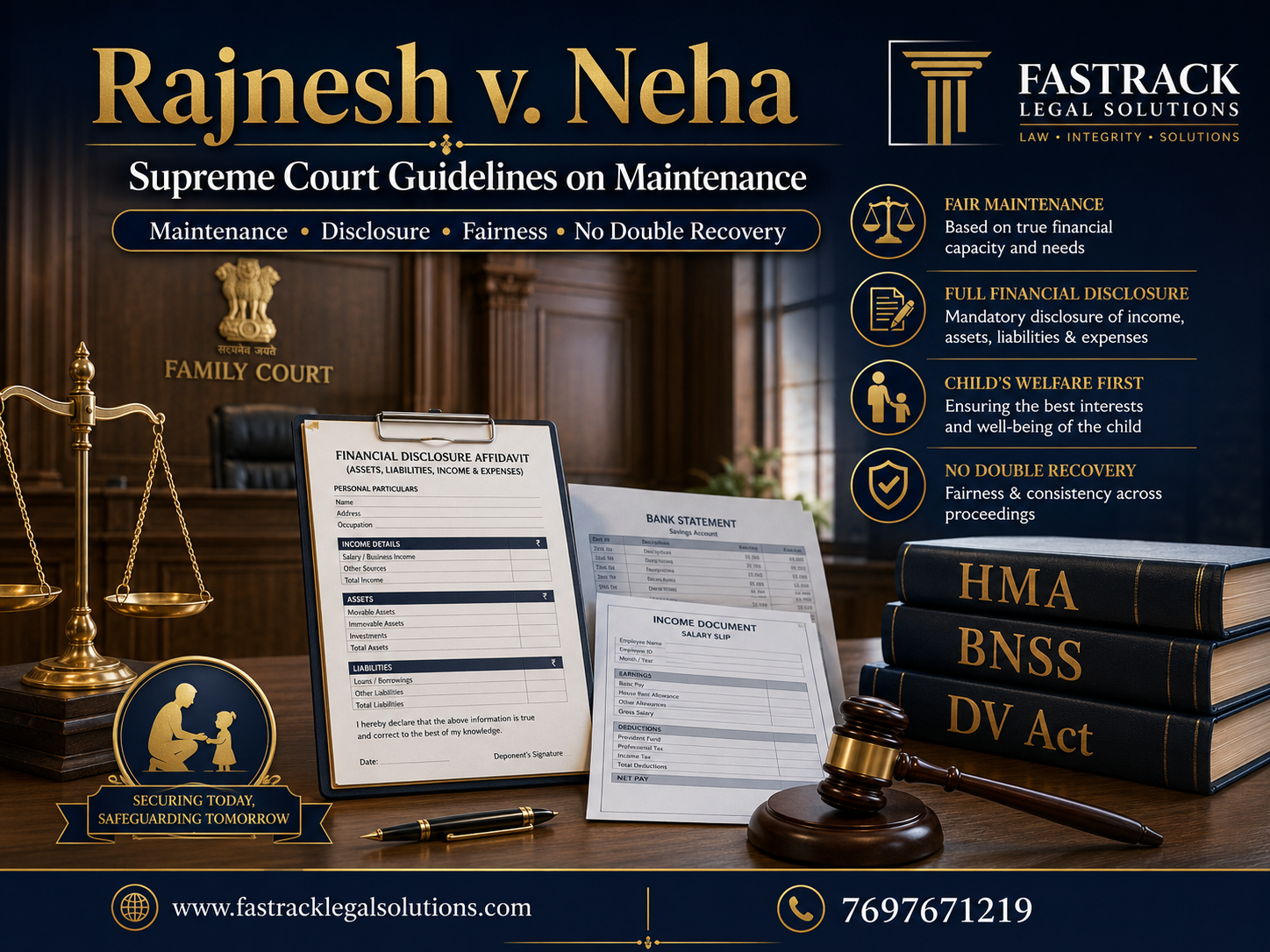
Rajnesh v. Neha, Criminal Appeal No. 730 of 2020, decided by the Supreme Court of India on 4 November 2020 and reported as (2021) 2 SCC 324, is a landmark judgment on maintenance in matrimonial disputes. The Supreme Court framed nationwide guidelines on financial disclosure, overlapping maintenance proceedings, interim maintenance, criteria for determining quantum, date...
Read More
Father’s Rights in Child Custody A father can claim custody, visitation, shared parenting, school access, medical information and meaningful contact with his child in India. However, the father does not have an automatic right to custody merely because he is the natural guardian under personal law. Indian courts decide custody and visitation on the basis...
Read More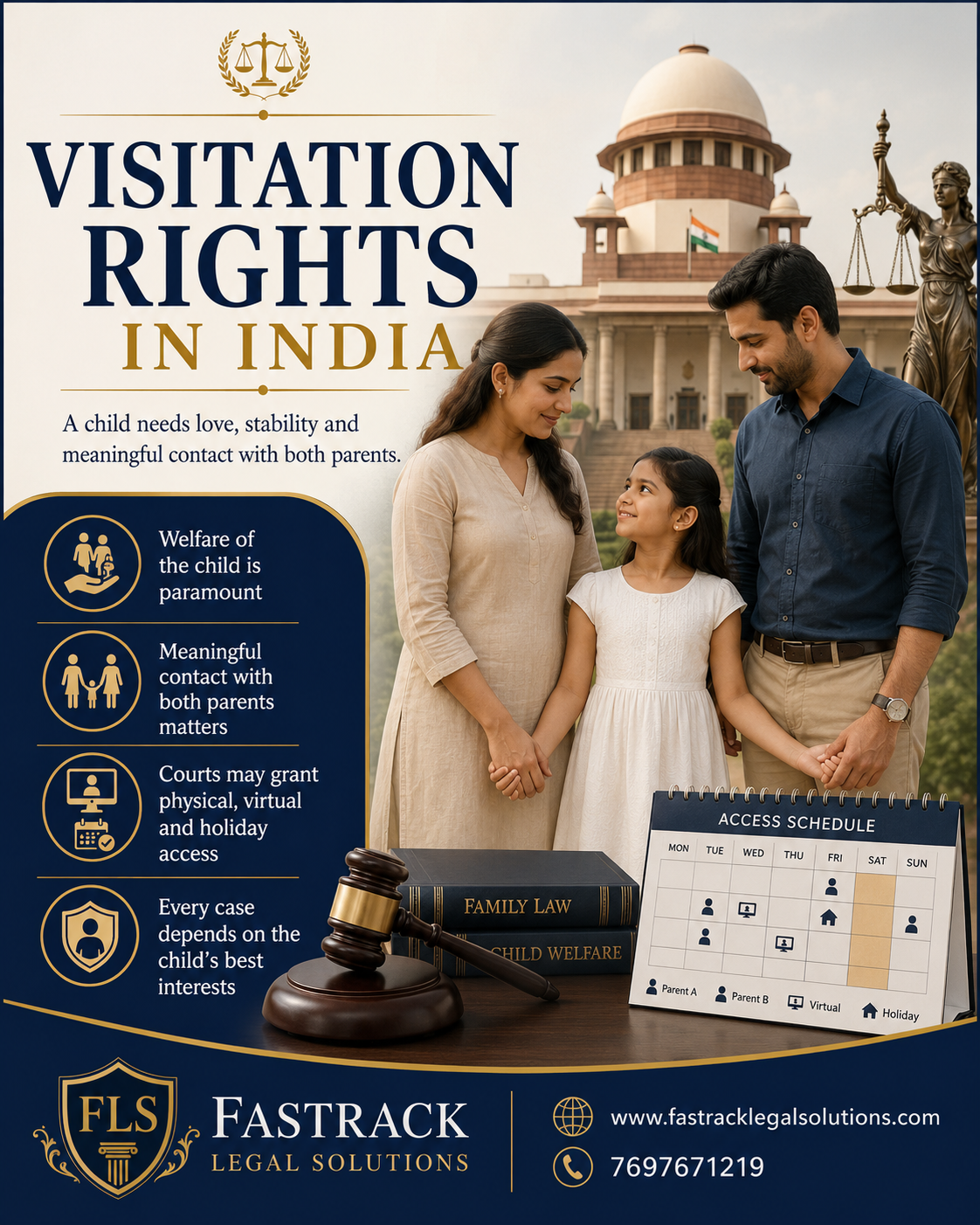
Visitation rights in India allow a parent who does not have physical custody of the child to meet, communicate with, and maintain a meaningful relationship with the child. Indian courts decide visitation rights on the basis of the welfare and best interests of the child, not merely on the claims of the mother or father....
Read More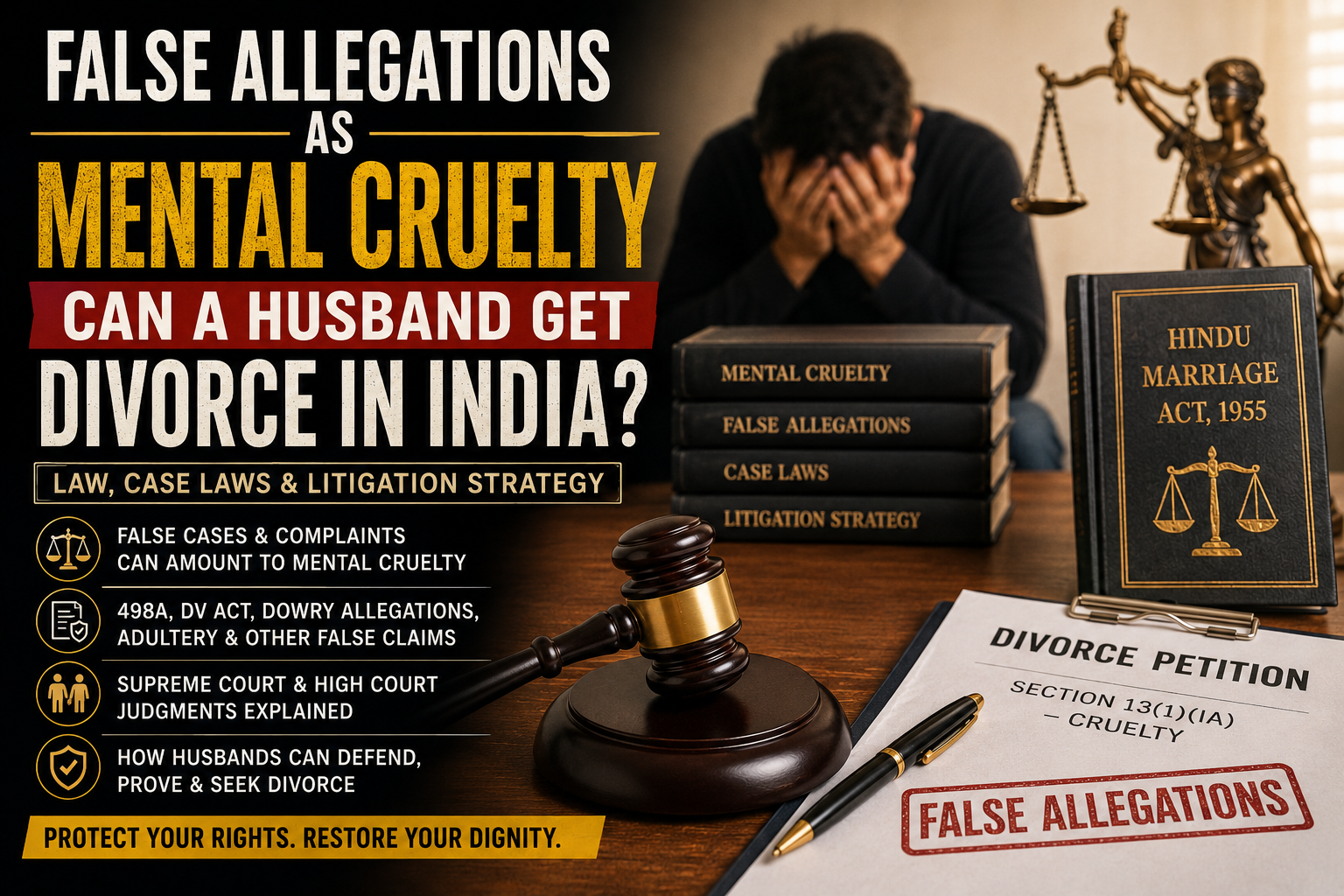
Yes. A husband can seek divorce in India on the ground of mental cruelty if false, reckless, scandalous or malicious allegations by the wife make it unreasonable for him to continue the matrimonial relationship. False allegations of adultery, dowry demand, domestic violence, illegitimacy, immoral conduct, criminal behaviour, or abusive complaints to employers, police authorities and...
Read More