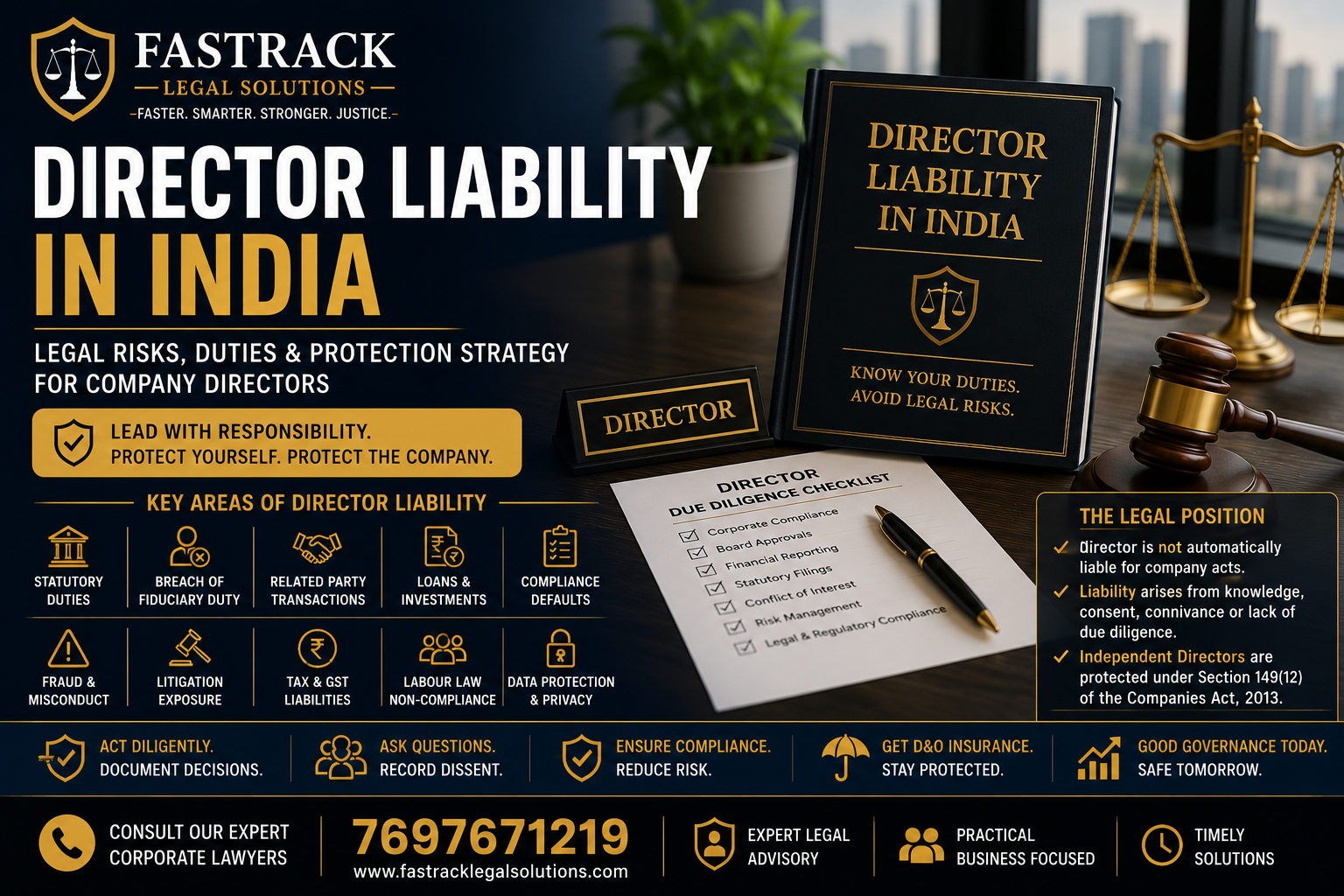
Director liability in India arises when a company director breaches statutory duties, participates in default, fails to exercise due diligence, authorises unlawful transactions, makes false statements, commits fraud, or is treated as an “officer who is in default” under the Companies Act, 2013. However, a director is not automatically criminally liable merely because he holds...
Read More
A shareholders agreement in India is a private contract between shareholders, and often the company, that regulates shareholding rights, transfer restrictions, management control, investor protection, exit rights, reserved matters, board representation and dispute resolution. The agreement should be consistent with the Companies Act, 2013 and the Articles of Association. The Supreme Court has recognised that...
Read More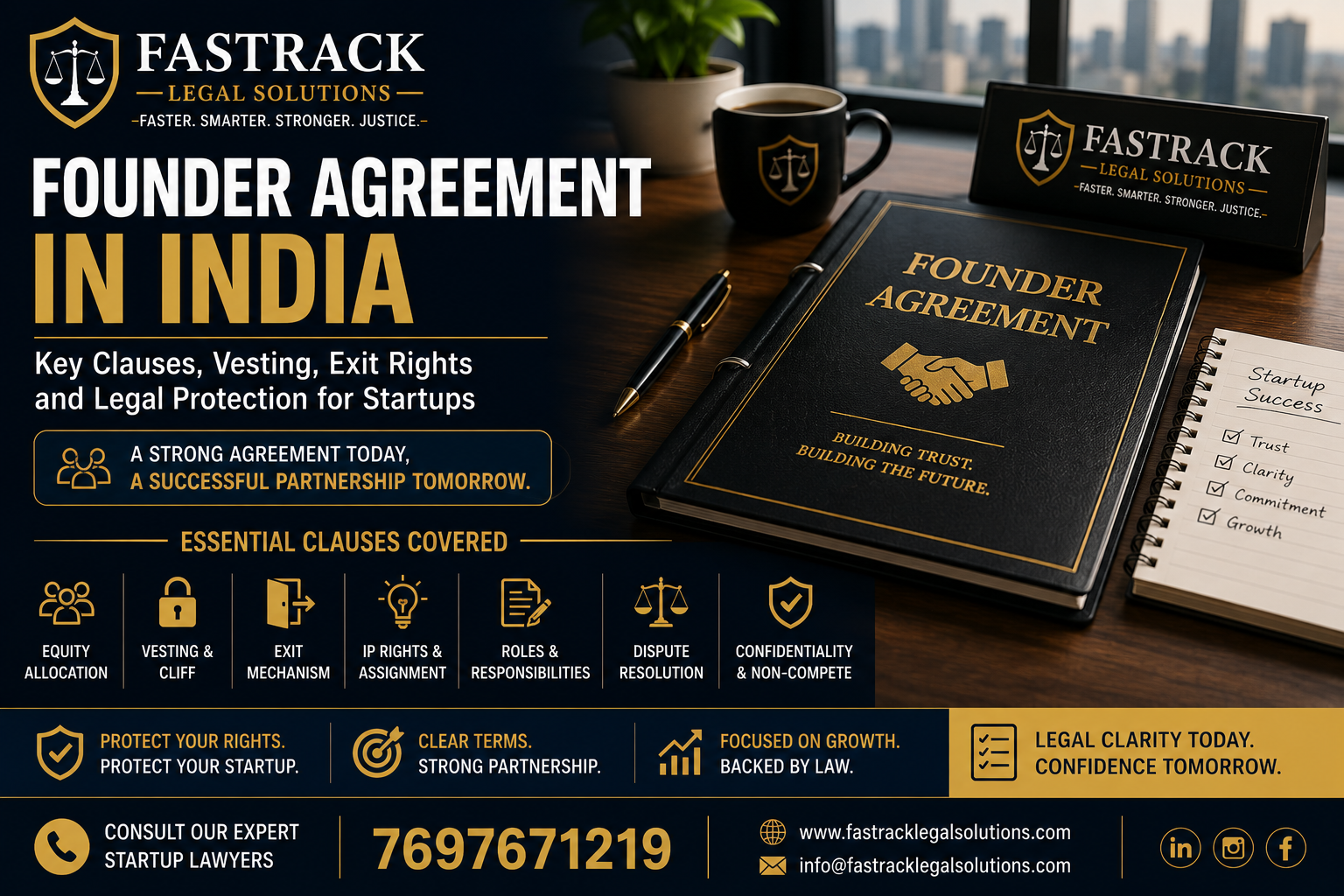
A founder agreement in India is a legally binding contract between startup founders that records equity ownership, founder roles, vesting, intellectual property assignment, decision-making rights, founder exit, confidentiality, dispute resolution and consequences of misconduct or abandonment. It is generally governed by the Indian Contract Act, 1872, the Companies Act, 2013, the company’s Articles of Association...
Read More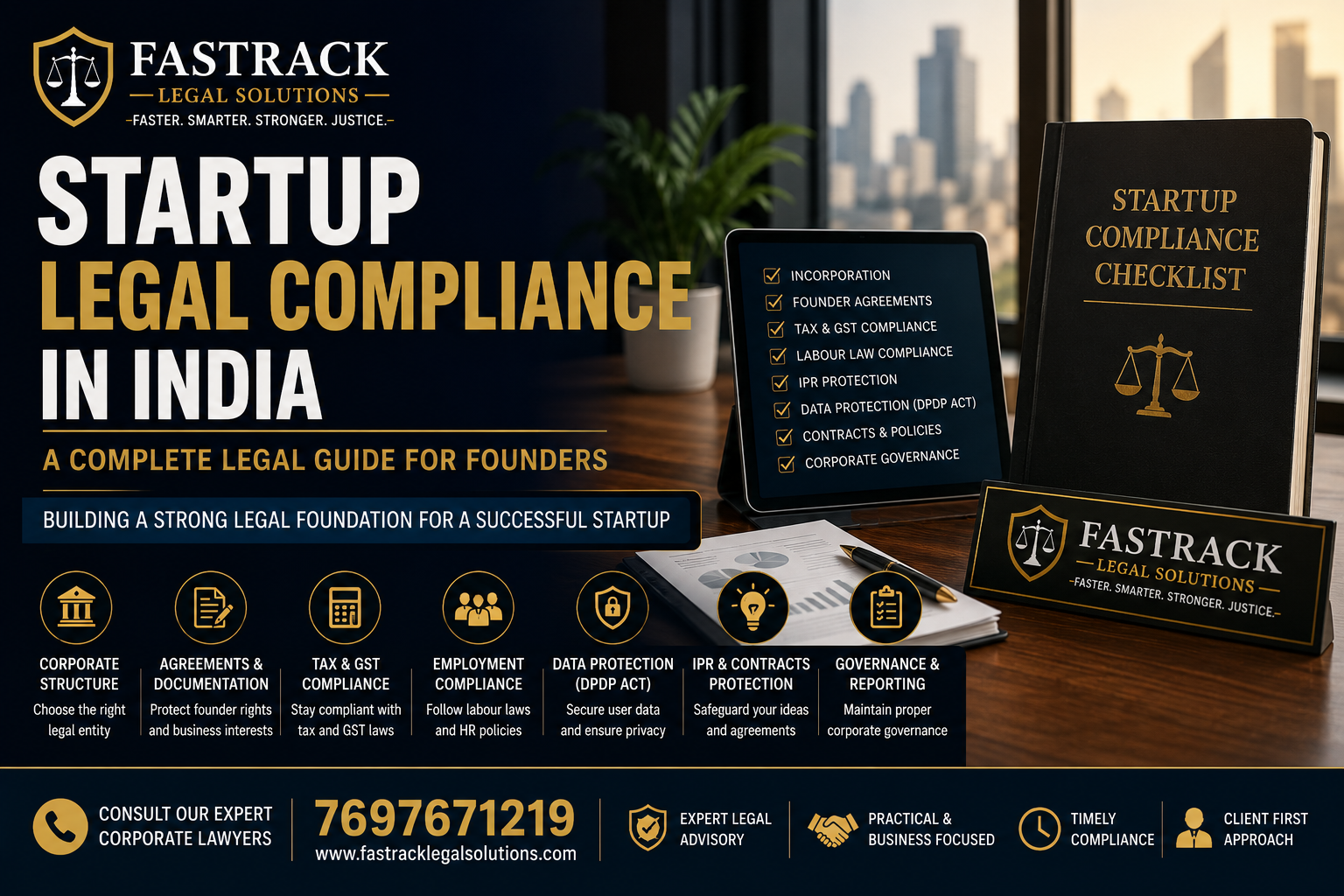
Startup legal compliance in India begins with choosing the correct business structure, completing incorporation, maintaining statutory registers, executing founder and shareholder agreements, protecting intellectual property, complying with tax and GST law, following labour and HR requirements, and ensuring data protection compliance. Startups seeking government recognition must also examine the DPIIT recognition framework, which was revised...
Read MoreFastrack Legal Solutions, Starting a new business is an exciting endeavor that requires careful planning and consideration, particularly when it comes to the legal aspects. Ensuring that your business operates within the boundaries of the law is crucial for long-term success and protection. In this article, we will explore the essential legal considerations when starting...
Read More