Current guide for police refusal to register a cognizable offence: Section 173(4) BNSS SP escalation, Section 175(3) Magistrate investigation, affidavit, evidence, jurisdiction and procedure.
Read MoreCurrent BNSS guide to non-bailable warrants: Sections 72-93, issue of warrants, bailable endorsement, recall/cancellation, bail, service, arrest, proclamation and practical remedies.
Read MoreSection 318 BNS is the current cheating provision in India. This guide explains its ingredients, punishment, breach-of-contract distinction, BNSS compounding, electronic jurisdiction, evidence, FIR strategy and defence.
Read More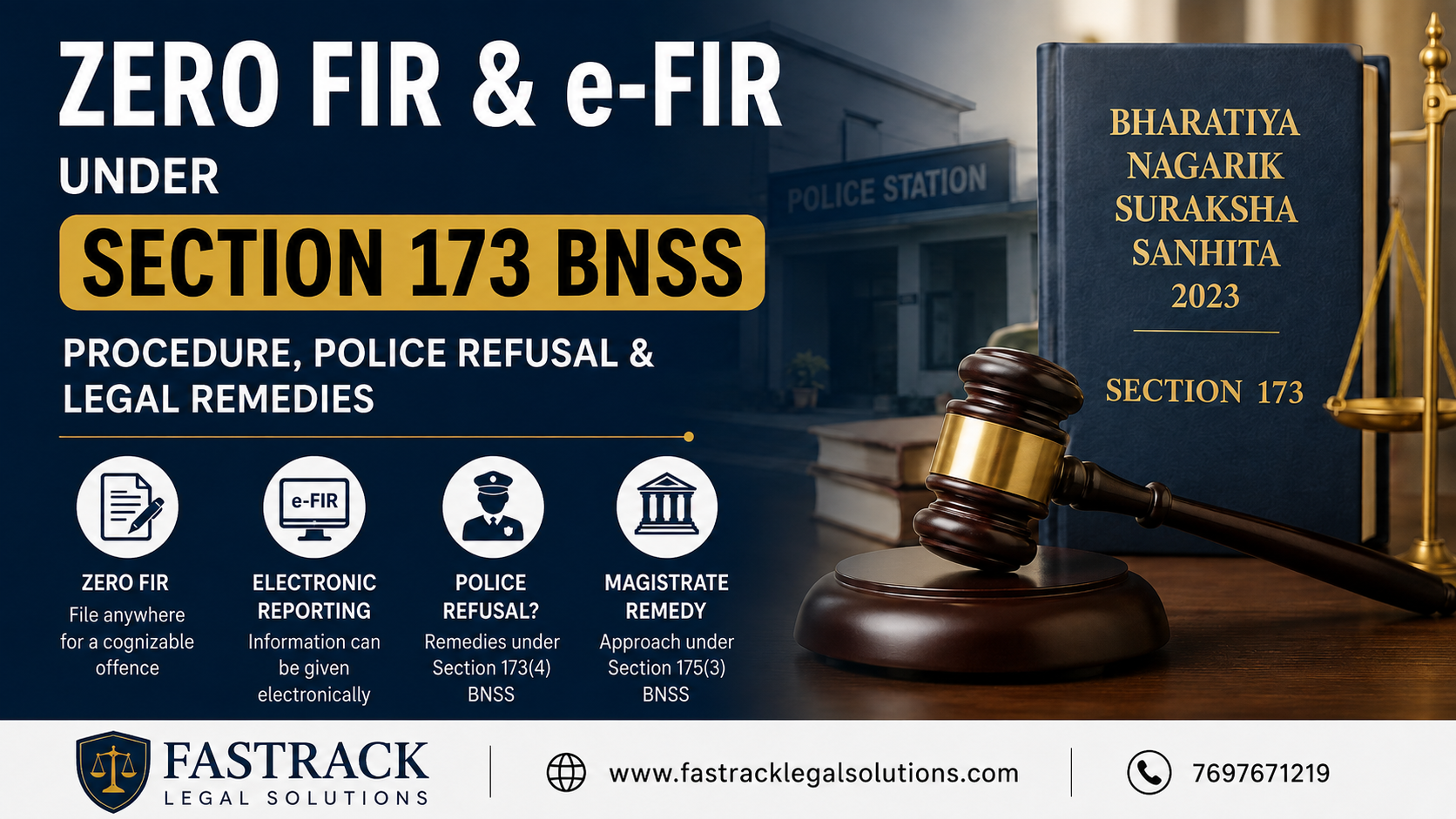
FIR, Zero FIR & e-FIR under BNSS LAW STUDENT NOTESCRIMINAL PROCEDURESECTION 173 BNSS Section 173 of the Bharatiya Nagarik Suraksha Sanhita, 2023 (BNSS) governs information relating to cognizable offences. It gives statutory recognition to territorial flexibility associated with Zero FIR, permits information by electronic communication, requires a free copy for the informant or victim, creates...
Read More
Default bail under BNSS Section 187 is a statutory right that arises when an accused is in custody and the investigating agency fails to complete investigation and file the chargesheet/final report within the prescribed period. The usual statutory period is 90 days for offences punishable with death, life imprisonment, or imprisonment of ten years or...
Read More
Anticipatory bail under BNSS Section 482 is a pre-arrest protection granted by the Court of Session or High Court to a person who has reason to believe that he may be arrested for a non-bailable offence. If anticipatory bail is granted, the person is released on bail in the event of arrest, subject to conditions...
Read More
FIR quashing after settlement means approaching the High Court to end criminal proceedings because the accused and complainant have voluntarily resolved their dispute. The High Court may quash an FIR or criminal case in exercise of inherent powers where continuing the case would be an abuse of process or where quashing is necessary to secure...
Read More
BNSS Section 35 deals with arrest without warrant and also contains the notice-before-arrest safeguard. Where arrest is not required in a cognizable offence, the police officer must issue a notice directing the person to appear before him or at a specified place. If the person complies and continues to comply with the notice, he should...
Read More
Regular bail after arrest is the legal remedy by which an accused person already in custody seeks release from the court during investigation, inquiry or trial. Under the Bharatiya Nagarik Suraksha Sanhita, 2023, bail in bailable offences is dealt with under Section 478, bail in non-bailable offences is dealt with under Section 480, special powers...
Read More
FIR quashing in India is the legal remedy by which the High Court may terminate a criminal case at the threshold where the FIR or criminal proceeding is an abuse of process, does not disclose any cognizable offence, is legally barred, is manifestly mala fide, or where continuation of prosecution would defeat the ends of...
Read More