Army non-empanelment guide covering ACR/CR errors, statutory complaints, Selection Board review, AFT jurisdiction, limitation, evidence and relief.
Read MoreA detailed guide to discharge from the Indian Army for red ink entries under Rule 13(3)(III)(v): when discharge is lawful, mandatory safeguards, AFT limitation, interim relief, pension consequences and Supreme Court rulings.
Read More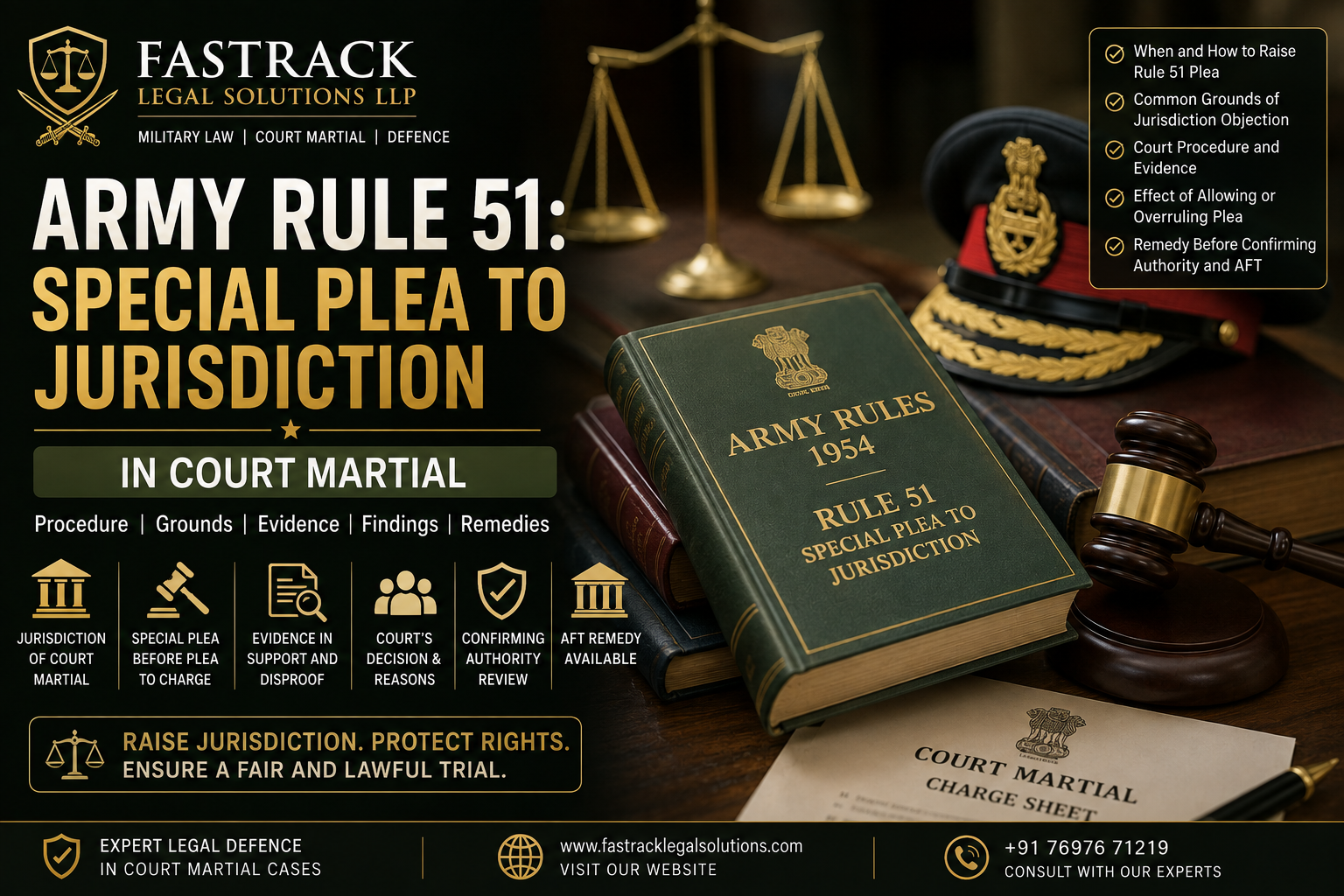
Army Rule 51 allows an accused, before pleading to the charge, to offer a special plea to the general jurisdiction of the Court-Martial. If the Court considers that the plea shows lack of jurisdiction, it must receive evidence in support of the plea, evidence from the prosecution in disproof or qualification, and hear addresses from...
Read More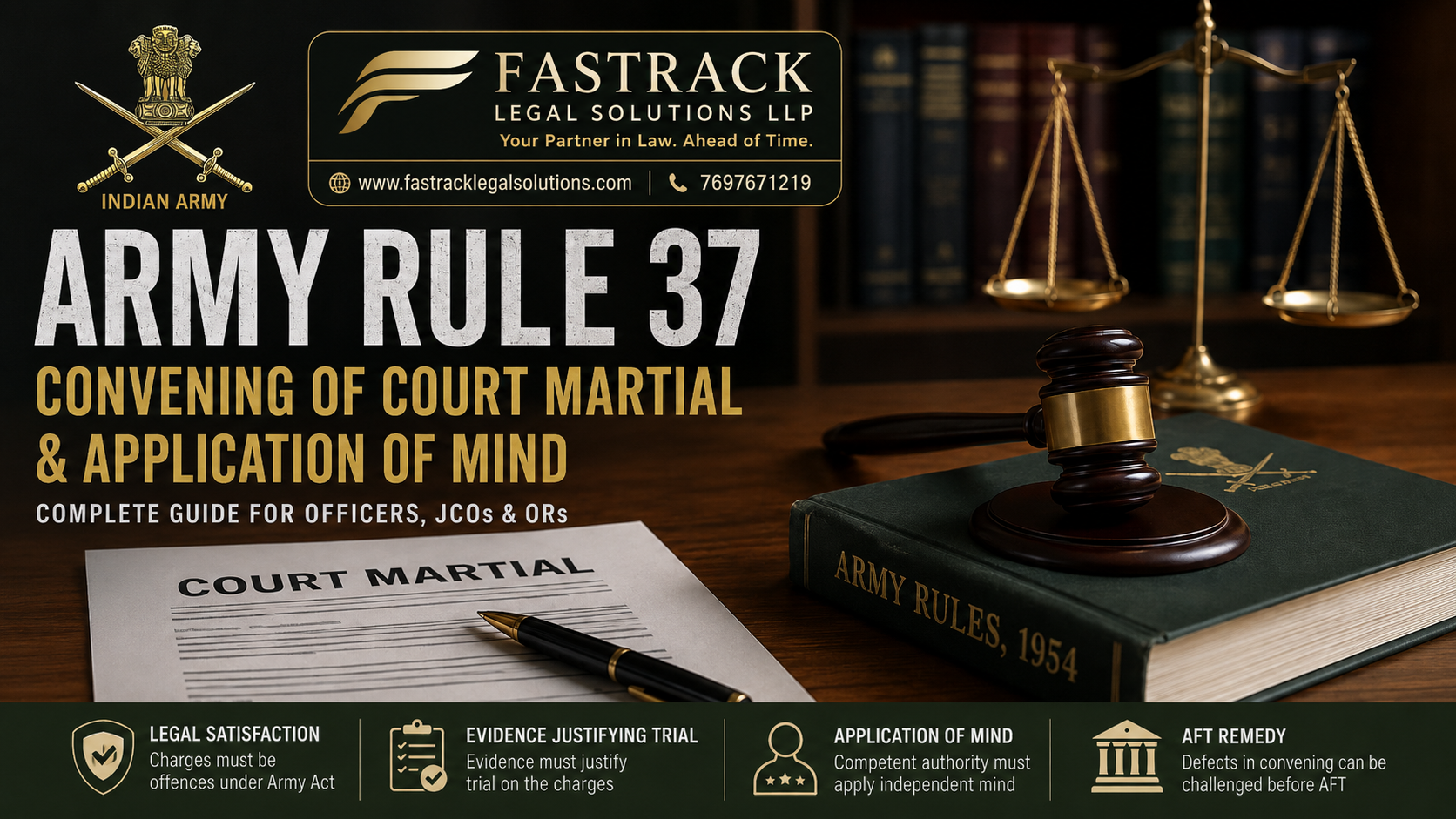
Army Rule 37 deals with the convening of General and District Courts-Martial. Before convening a General or District Court-Martial, the competent officer must first satisfy himself that the charges are offences within the meaning of the Army Act and that the evidence justifies a trial on those charges. If he is not so satisfied, he...
Read More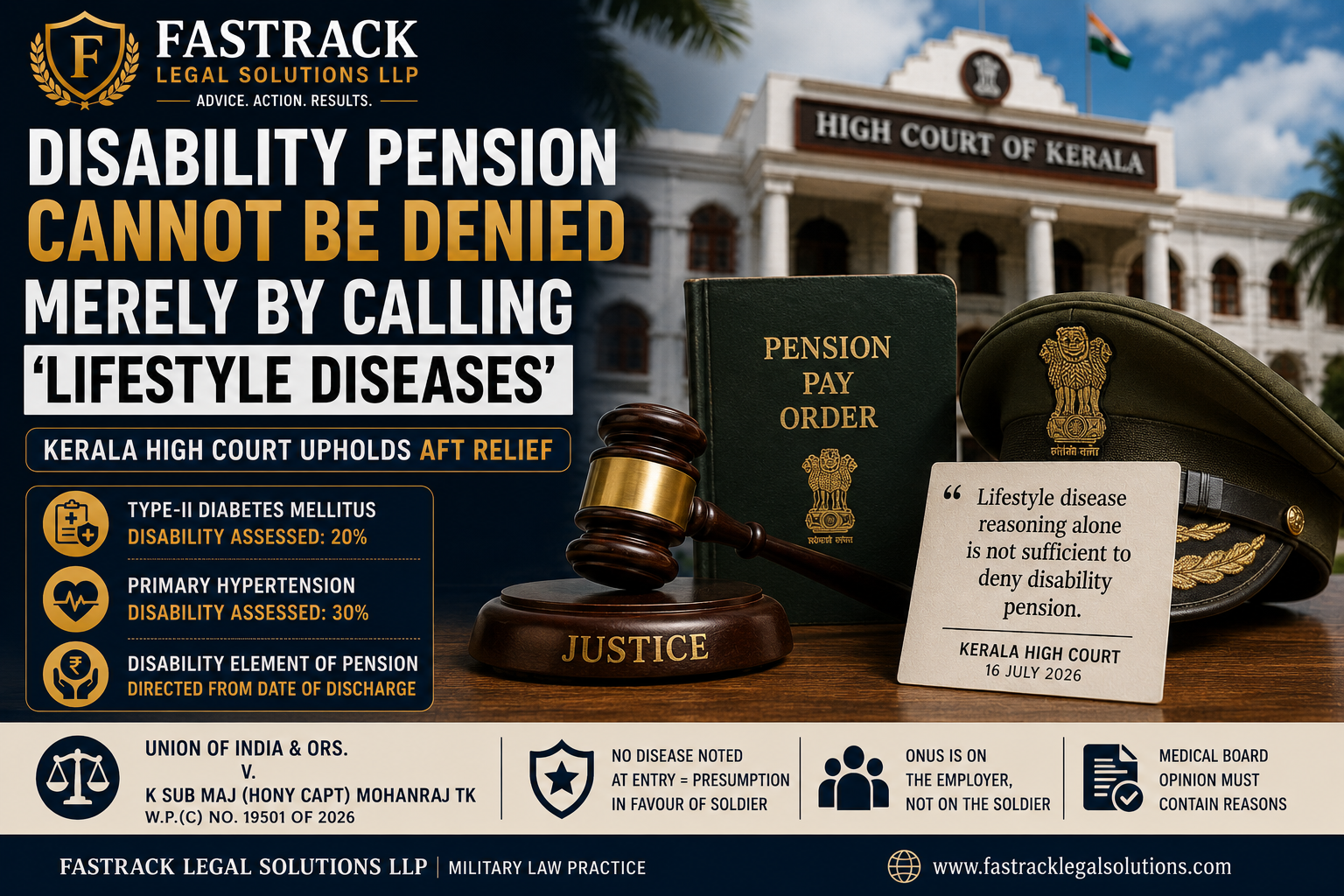
In Union of India v. Mohanraj TK, the Kerala High Court dismissed the Union of India’s writ petition challenging the Armed Forces Tribunal, Kochi’s order granting disability pension-related relief to a retired Subedar Major/Honorary Captain. The Court held that where no disease was recorded at the time of enrolment, the soldier is entitled to statutory...
Read More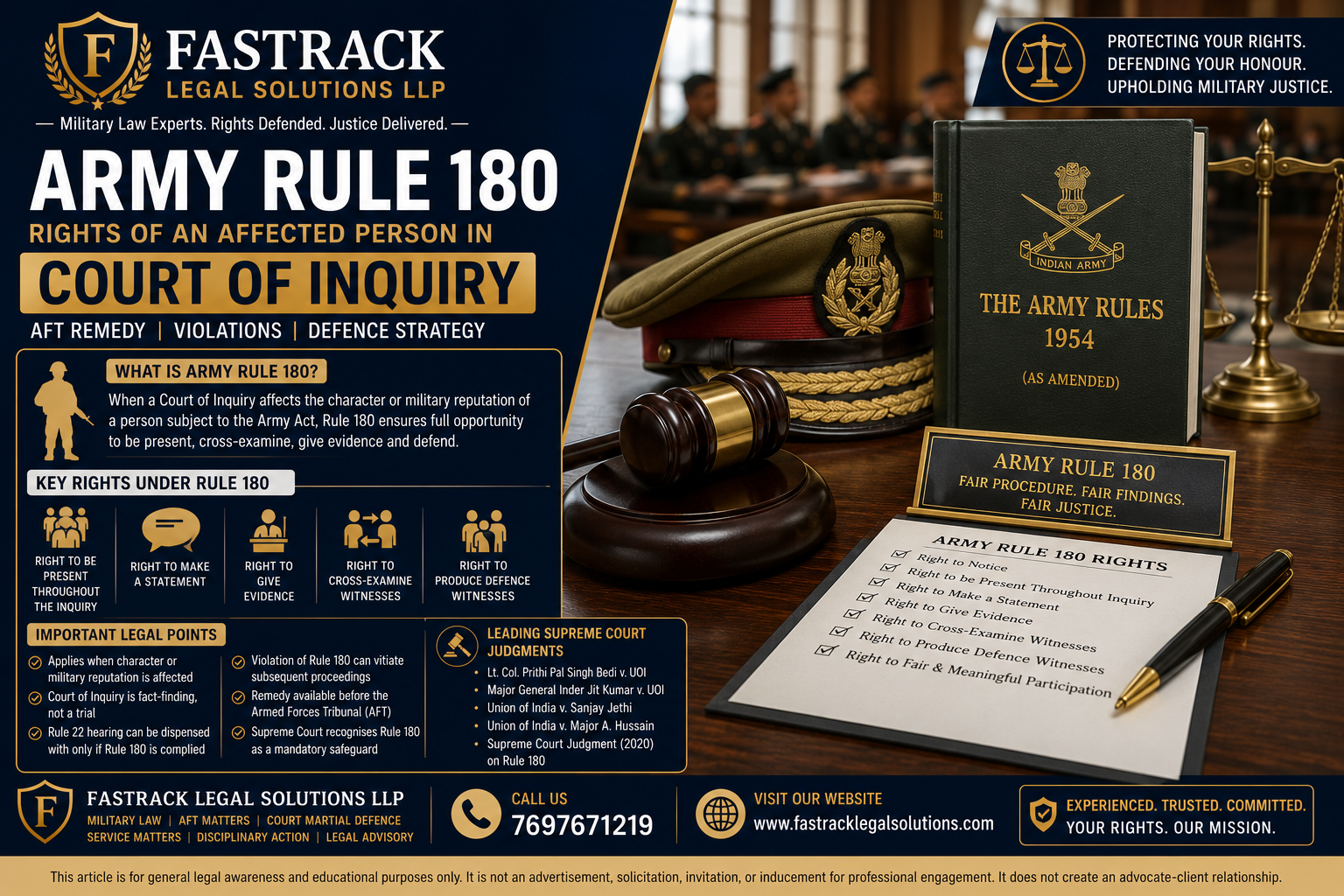
Army Rule 180 protects a person subject to the Army Act when a Court of Inquiry affects his character or military reputation. In such a case, the affected person must be given full opportunity to remain present throughout the inquiry, make a statement, give evidence, cross-examine witnesses whose evidence affects his character or military reputation,...
Read More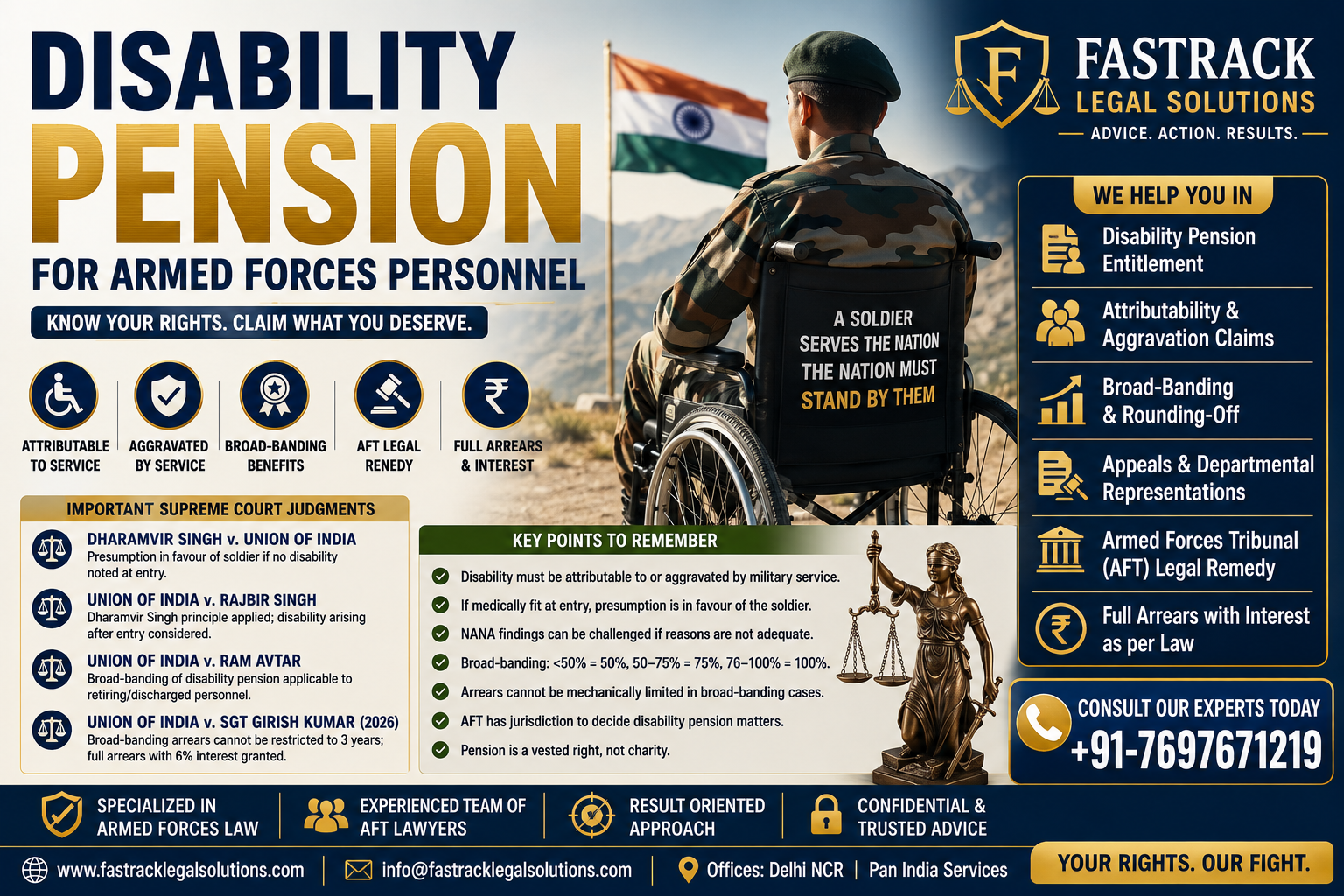
Armed Forces Pension Law · Medical Boards · Broad-Banding · AFT Disability Pension for Armed Forces: Eligibility, Medical Board, Reassessment, Broad-Banding & AFT Appeal 2026 A practical legal guide to disability-pension entitlement, NANA findings, attributable/aggravated disabilities, reassessment and resurvey medical boards, broad-banding, arrears and Armed Forces Tribunal remedies. Legal position at a glance: Disability-pension entitlement...
Read More
In Union of India through its Secretary v. Sgt Girish Kumar and Others, 2026 INSC 149, decided on 12 February 2026, the Supreme Court held that arrears arising from broad-banding of disability pension cannot be restricted to only three years before filing an Original Application before the Armed Forces Tribunal. The Court held that disability...
Read MoreA statutory complaint in the Indian Army is a formal grievance-redressal remedy available under the Army Act, 1950, principally under Section 26 for persons other than officers and Section 27 for officers. It is used when an Army personnel considers himself wronged by a superior authority, adverse service action, ACR/APAR grading, promotion denial, administrative injustice,...
Read More
Court martial appeal in India lies before the Armed Forces Tribunal under Section 15 of the Armed Forces Tribunal Act, 2007 against an order, decision, finding or sentence passed by a court martial. The Tribunal may interfere where the finding is legally unsustainable, involves a wrong decision on a question of law, or where material...
Read More