
Visitation rights in India allow a parent who does not have physical custody of the child to meet, communicate with, and maintain a meaningful relationship with the child. Indian courts decide visitation rights on the basis of the welfare and best interests of the child, not merely on the claims of the mother or father....
Read MoreIn India, child custody is decided not on the superiority of the mother, father, or any relative, but on the welfare and best interest of the child. Courts examine the child’s age, education, emotional security, health, stability, parental conduct, financial capacity, moral environment, and, where the child is mature enough, the child’s preference. The law...
Read More
A working wife is not automatically barred from claiming maintenance in India. However, a husband can legally challenge maintenance where the wife has sufficient independent income, is financially self-sustaining, is concealing employment or assets, has exaggerated expenses, or is seeking overlapping maintenance in multiple proceedings. Under Section 24 of the Hindu Marriage Act, either spouse...
Read More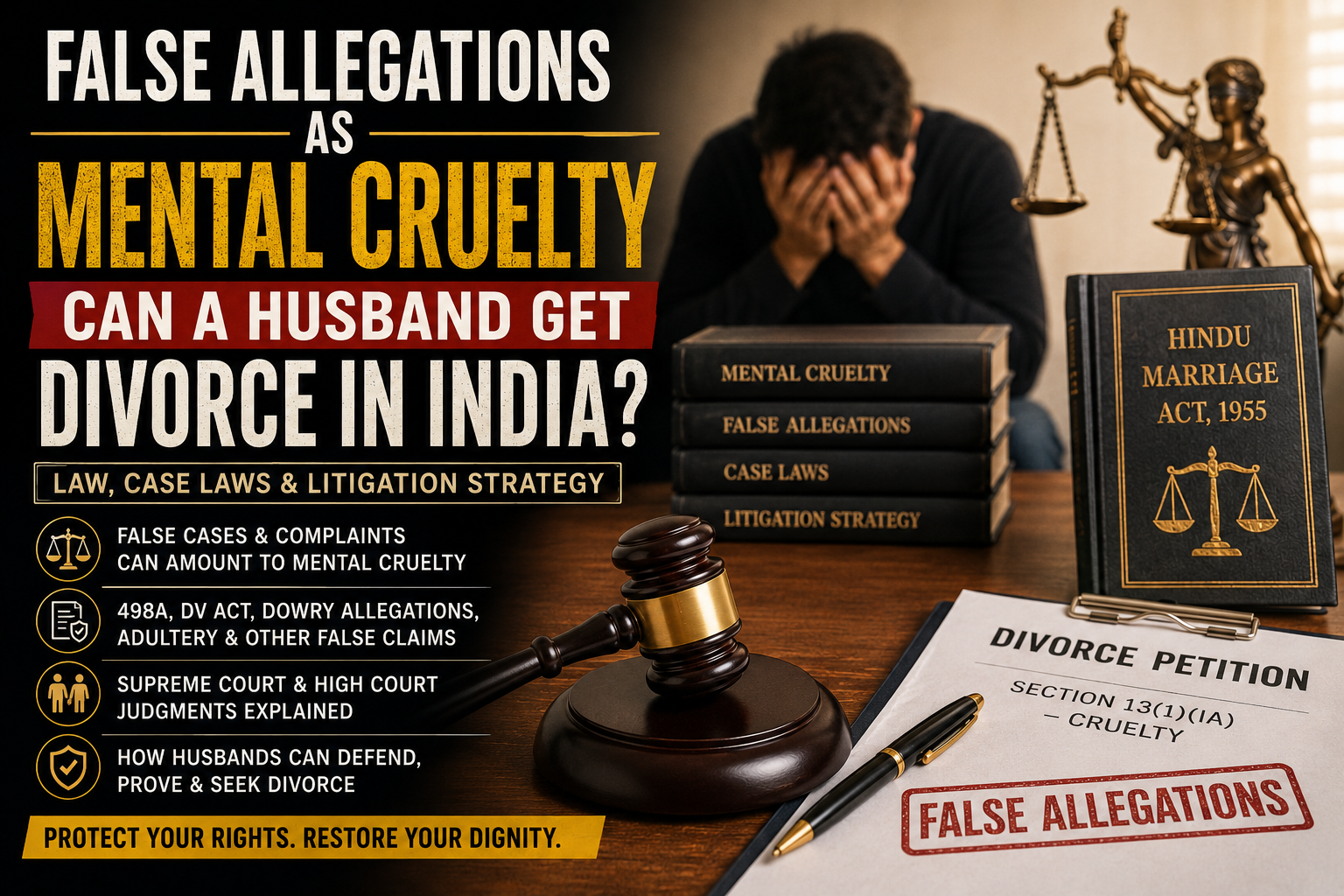
Yes. A husband can seek divorce in India on the ground of mental cruelty if false, reckless, scandalous or malicious allegations by the wife make it unreasonable for him to continue the matrimonial relationship. False allegations of adultery, dowry demand, domestic violence, illegitimacy, immoral conduct, criminal behaviour, or abusive complaints to employers, police authorities and...
Read More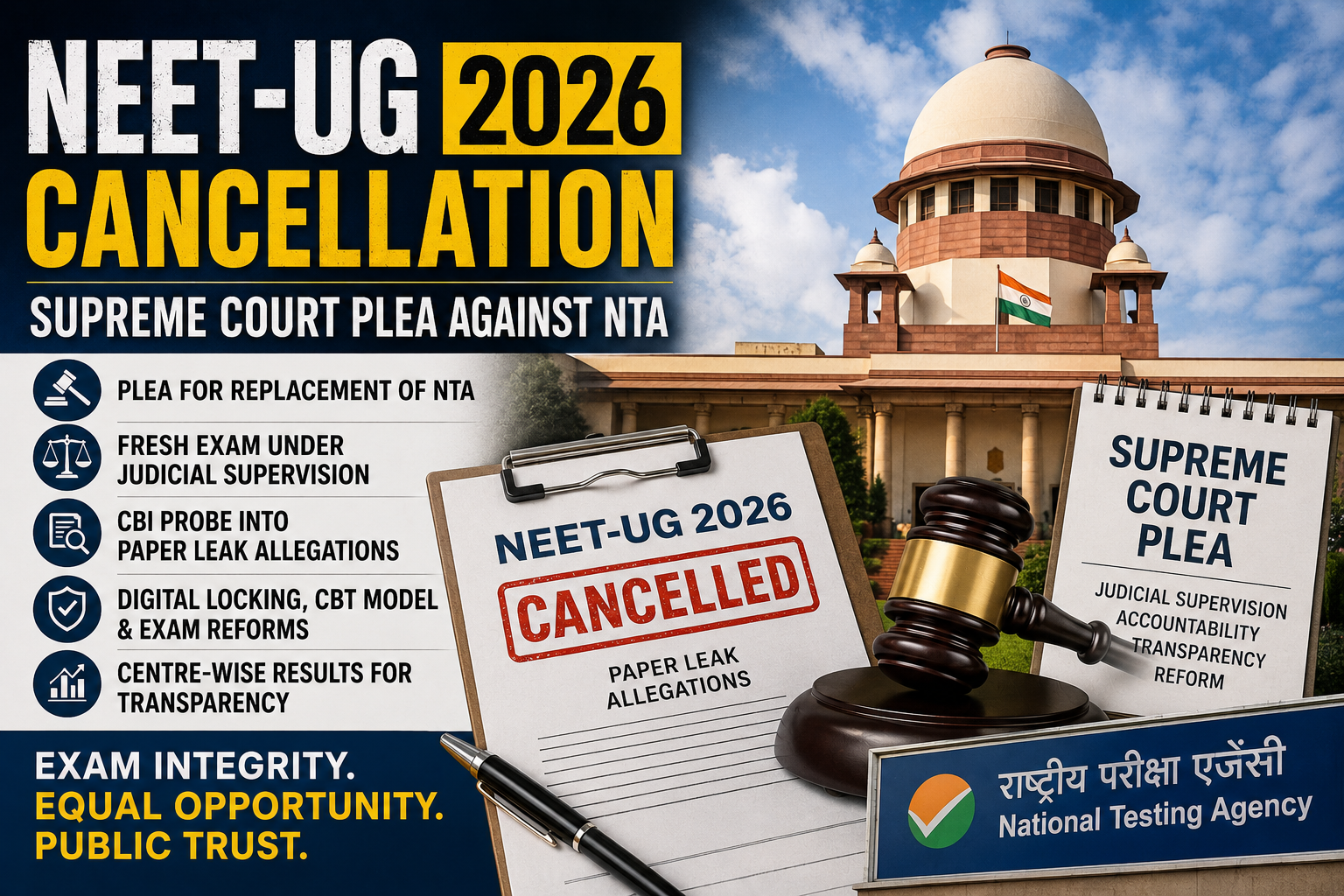
The reported Supreme Court plea filed after the cancellation of NEET-UG 2026 raises a question larger than one medical entrance examination: whether India’s national testing architecture can continue to command constitutional confidence when allegations of paper leak, compromised question security and institutional failure recur in high-stakes examinations. The petition reportedly seeks replacement or restructuring of the National Testing Agency, a fresh NEET-UG 2026 examination under judicial supervision, constitution of a high-powered monitoring committee, digital locking of question papers, transition towards computer-based testing, CBI status reporting, and publication of centre-wise results for anomaly detection.
Read More
Summary A husband in India is not automatically liable to pay any amount demanded as maintenance or alimony merely because a matrimonial dispute has arisen. At the same time, he cannot defeat maintenance by emotional allegations, artificial poverty, inflated liabilities or concealment of income. Indian courts decide maintenance on the basis of need, capacity, income,...
Read More
Introduction: Fathers Are Not Legal Strangers to Their Children One of the most persistent myths in Indian matrimonial litigation is that child custody is automatically a mother’s right and that the father’s role is limited to paying school fees, maintenance and weekend expenses. That is not the law. Indian courts do not treat a child...
Read More
Introduction: When Matrimonial Litigation Becomes Criminal Litigation Matrimonial litigation in India often begins as a marital breakdown but quickly travels into criminal law. A divorce dispute may be accompanied by allegations of cruelty, dowry demand, domestic violence, misappropriation of jewellery, economic abuse, intimidation, assault, and harassment by the husband’s family. Some complaints are genuine. Some...
Read More
A husband in India can file for divorce on legally recognised grounds such as cruelty, desertion, adultery, conversion, unsoundness of mind, renunciation, not being heard of for seven years, or by mutual consent, depending on the personal law applicable to the marriage. Under the Hindu Marriage Act, 1955, divorce is available to either spouse under...
Read More
Disability pension is not a benevolent concession; it is a legal recognition of the medical cost of service.By Adv. Govind BaliA disability pension is a pensionary benefit granted to armed forces personnel where a disability is attributable to or aggravated by military service. Indian courts have repeatedly held that a disability pension cannot be denied...
Read More