A practical 2026 guide to filing before the Armed Forces Tribunal Principal Bench in New Delhi, including jurisdiction, service Original Applications, disability pension matters, court-martial appeals, exhaustion of remedies, limitation, documents and registry preparation.
Read MoreArmy Rule 22 governs the hearing of charge by the Commanding Officer before further disciplinary action. This guide explains the accused’s rights, the Rule 180 exception, Summary of Evidence linkage and AFT consequences.
Read More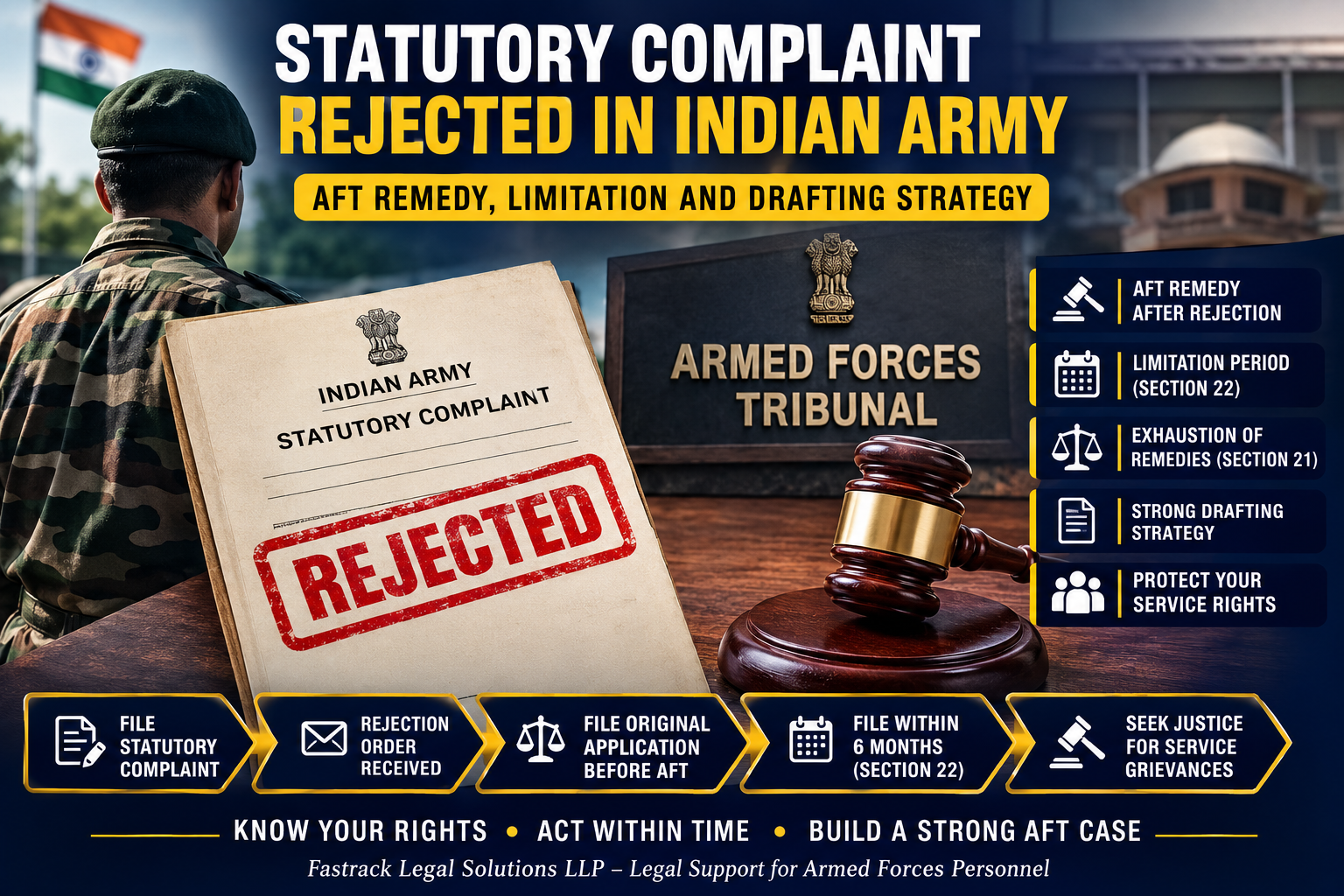
If a statutory complaint in the Indian Army is rejected, the aggrieved person may approach the Armed Forces Tribunal by filing an Original Application, provided the dispute falls within the Tribunal’s service-matter jurisdiction. For officers, the statutory remedy is linked to Section 27 of the Army Act, 1950, which allows an officer who deems himself...
Read More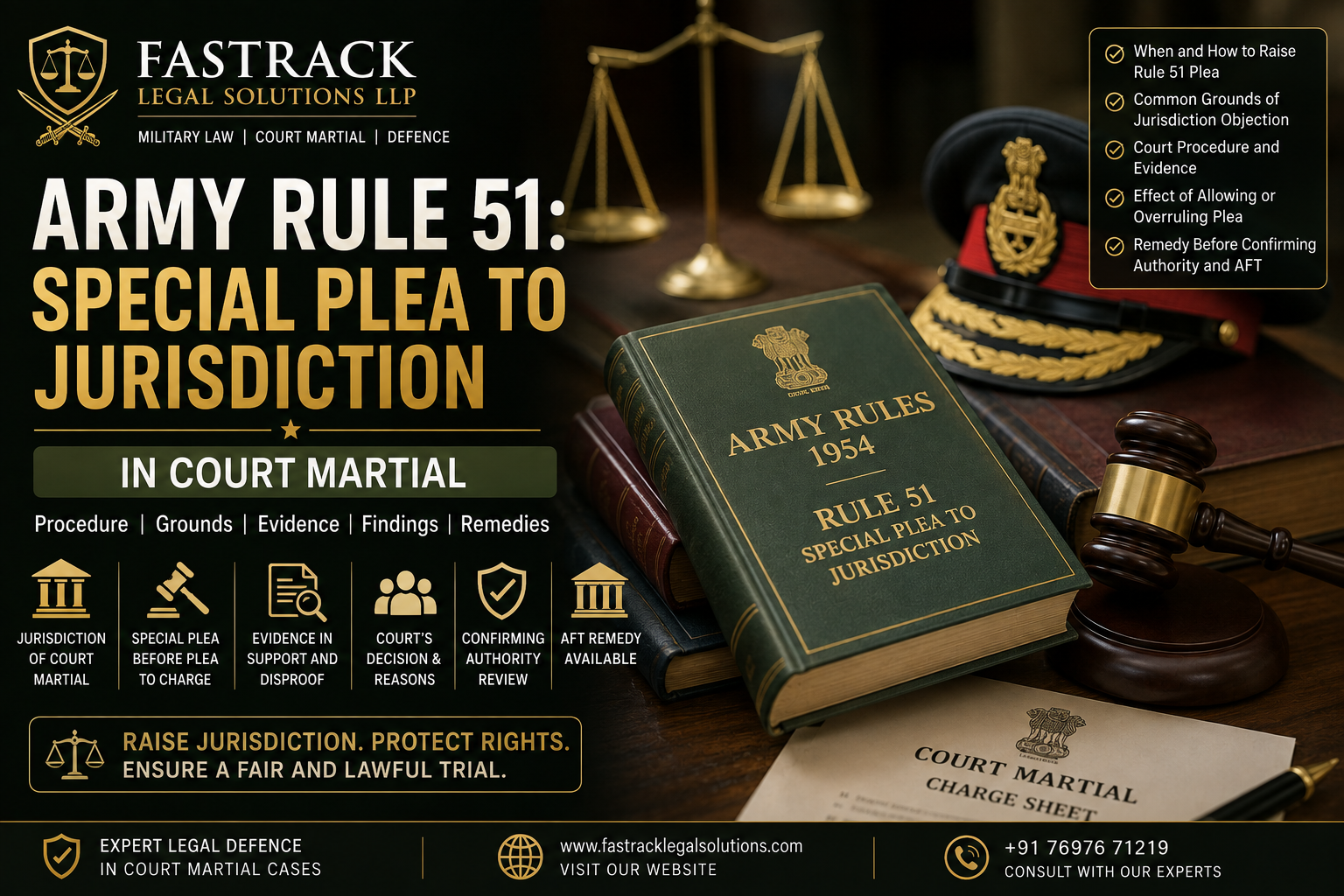
Army Rule 51 allows an accused, before pleading to the charge, to offer a special plea to the general jurisdiction of the Court-Martial. If the Court considers that the plea shows lack of jurisdiction, it must receive evidence in support of the plea, evidence from the prosecution in disproof or qualification, and hear addresses from...
Read More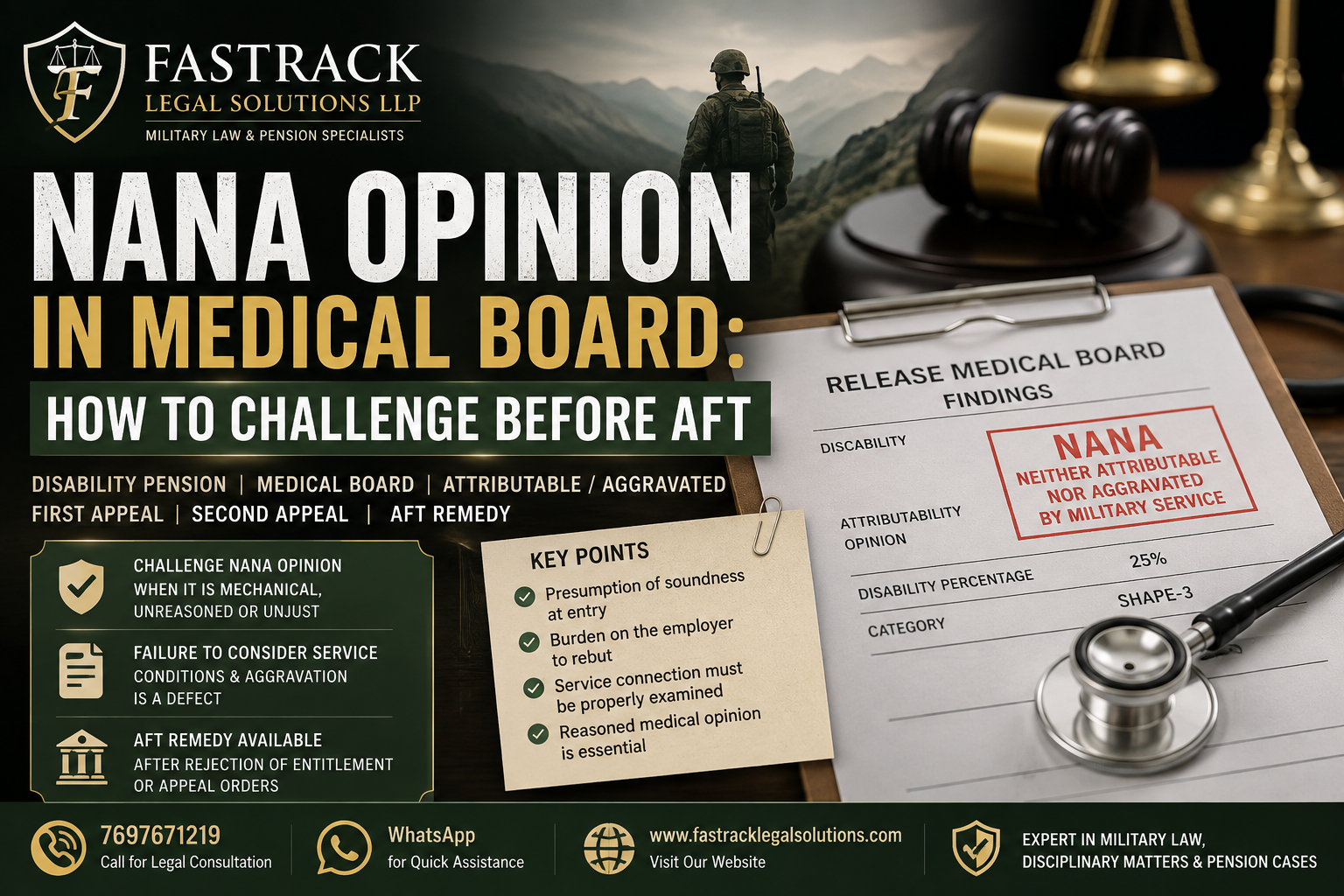
Armed Forces Pension Law · Medical Board · NANA · AFT Attributable or Aggravated by Military Service? NANA Medical Board, Dharamvir Singh & AFT Challenge 2026 A practical guide to the legal difference between attributability, aggravation and NANA; the effect of entry medical fitness; the role of Dharamvir Singh and later cases; the 2023 Entitlement...
Read More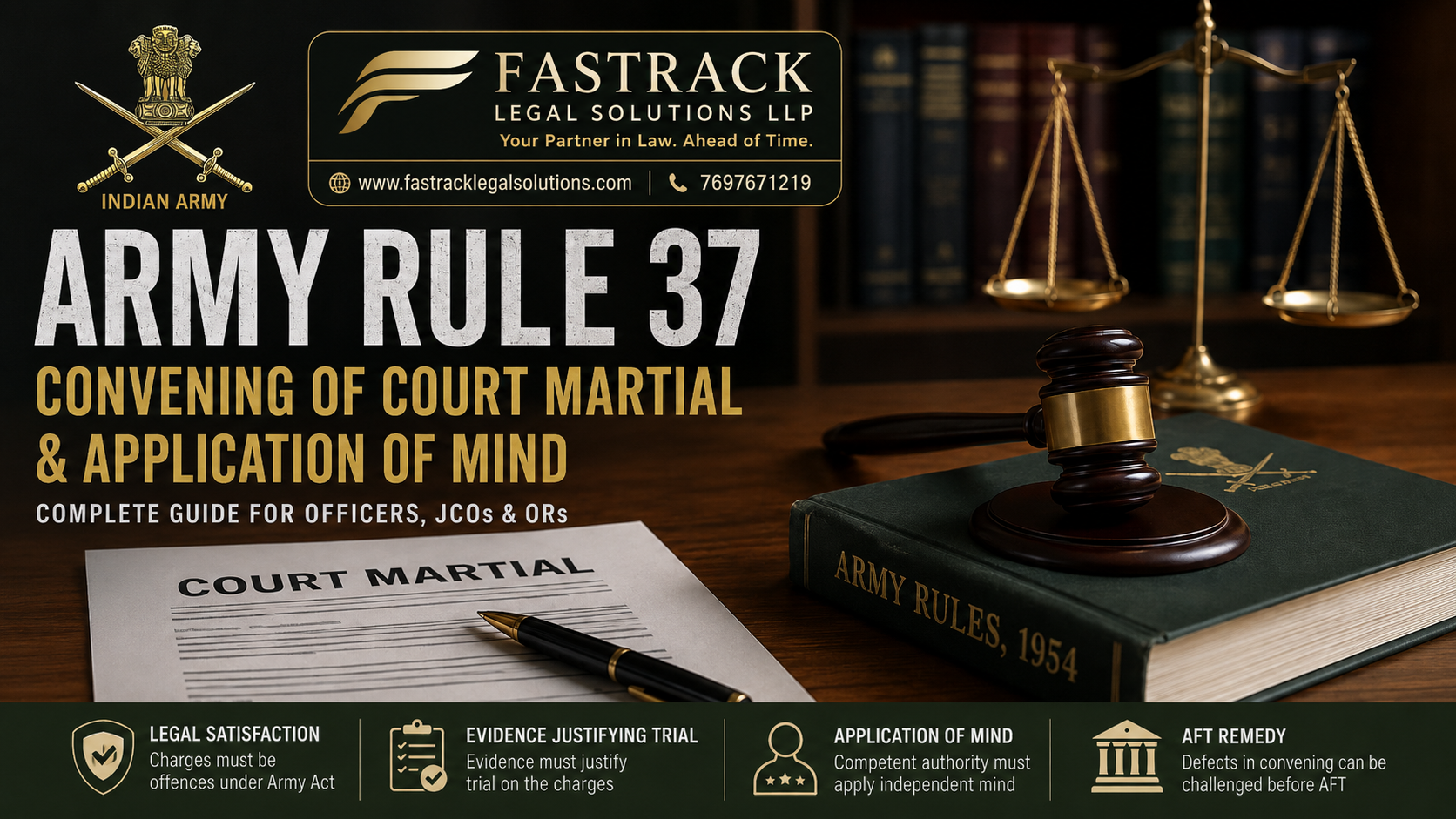
Army Rule 37 deals with the convening of General and District Courts-Martial. Before convening a General or District Court-Martial, the competent officer must first satisfy himself that the charges are offences within the meaning of the Army Act and that the evidence justifies a trial on those charges. If he is not so satisfied, he...
Read More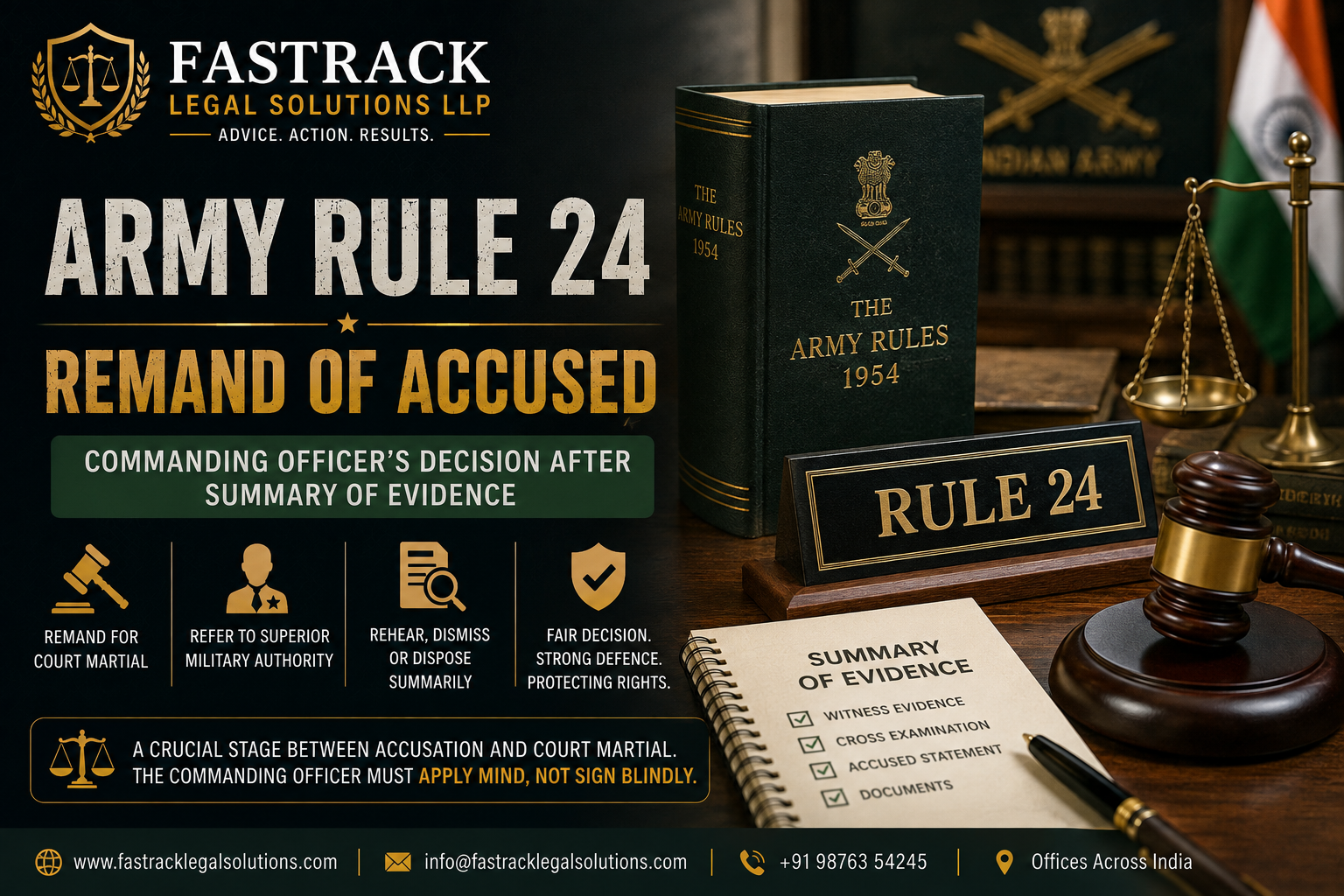
Army Rule 24 deals with the remand of accused after the Summary of Evidence is recorded under Army Rule 23. The Summary of Evidence must be considered by the Commanding Officer, who then has three broad options: remand the accused for trial by court martial, refer the case to the proper superior military authority, or,...
Read More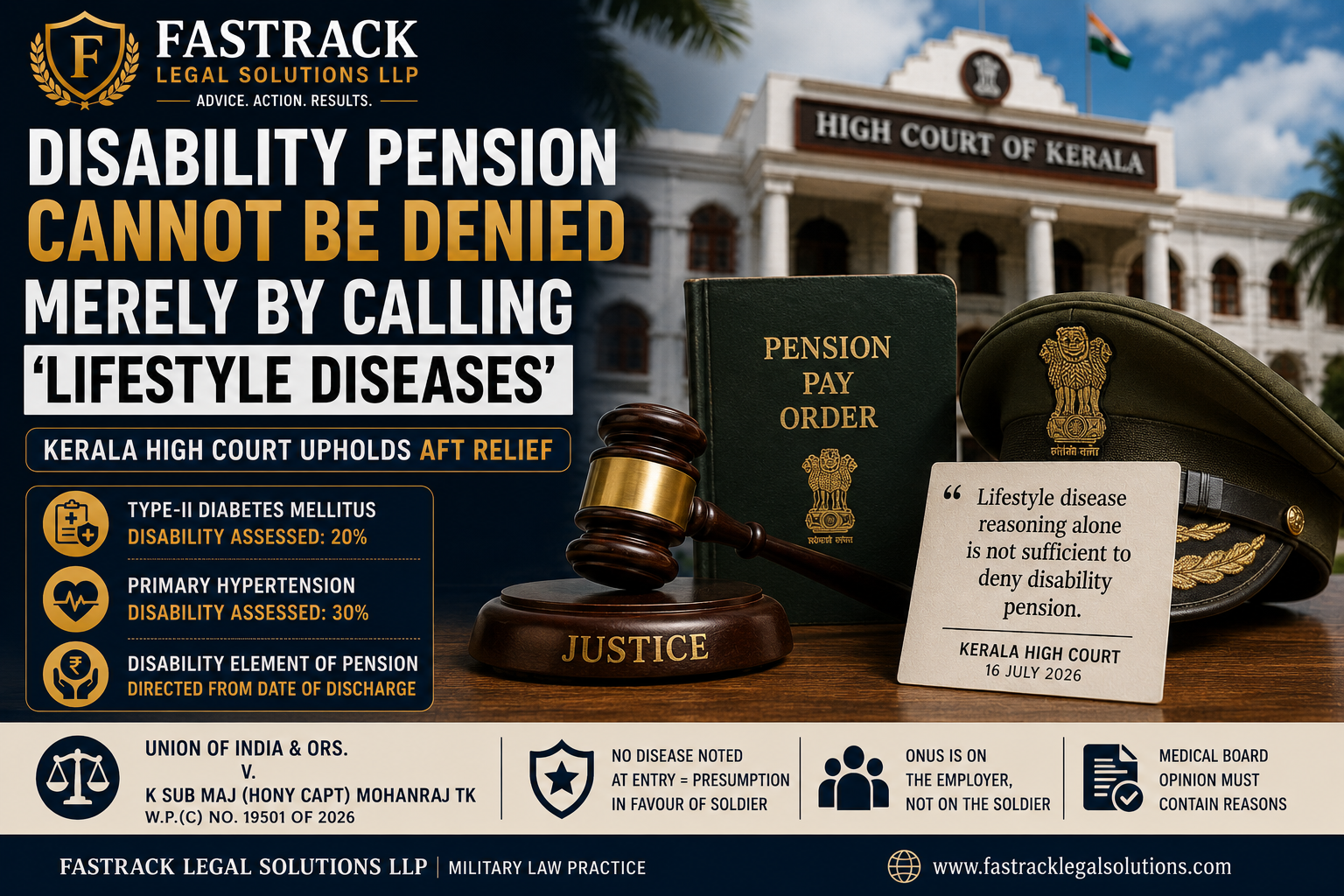
In Union of India v. Mohanraj TK, the Kerala High Court dismissed the Union of India’s writ petition challenging the Armed Forces Tribunal, Kochi’s order granting disability pension-related relief to a retired Subedar Major/Honorary Captain. The Court held that where no disease was recorded at the time of enrolment, the soldier is entitled to statutory...
Read More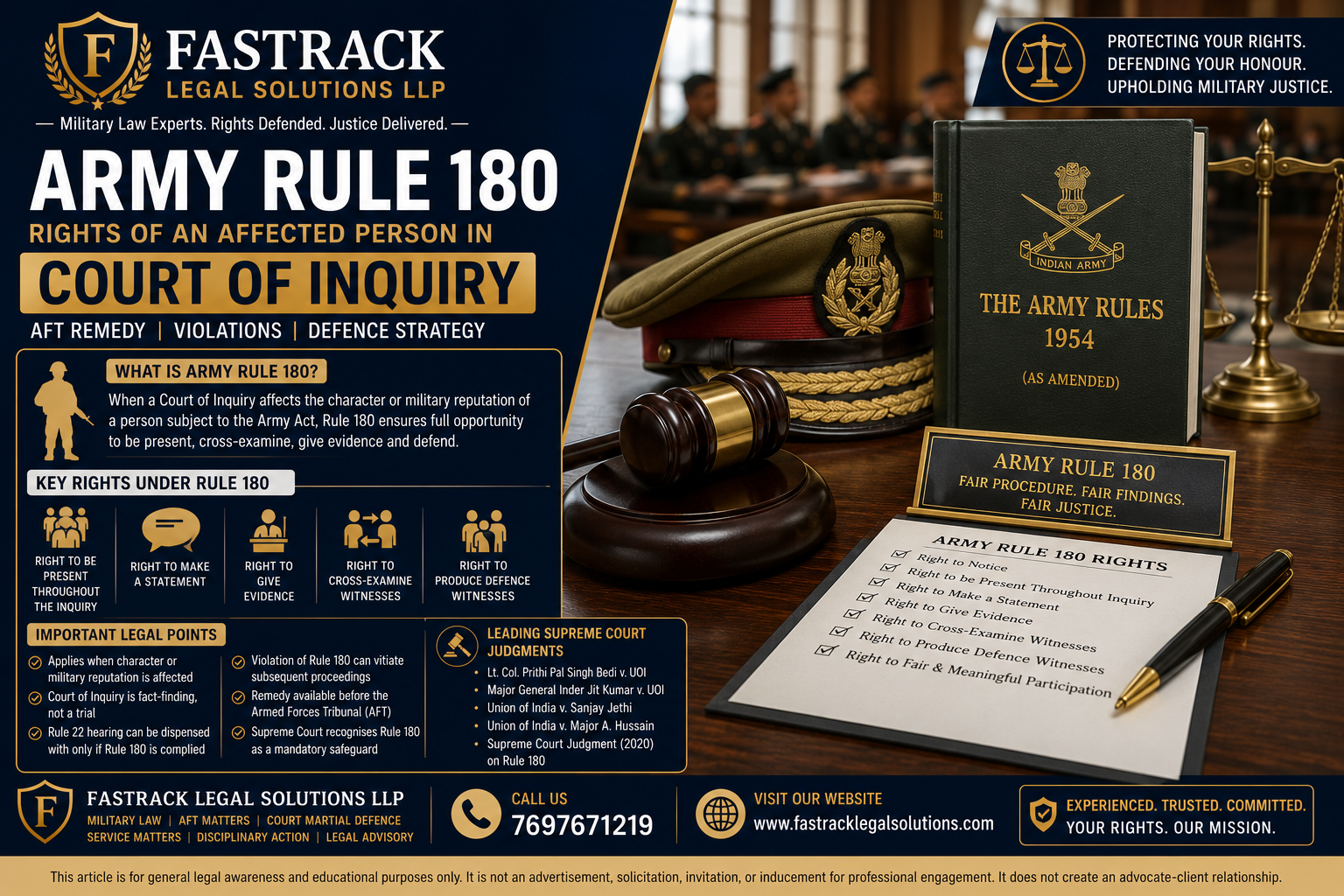
Army Rule 180 protects a person subject to the Army Act when a Court of Inquiry affects his character or military reputation. In such a case, the affected person must be given full opportunity to remain present throughout the inquiry, make a statement, give evidence, cross-examine witnesses whose evidence affects his character or military reputation,...
Read More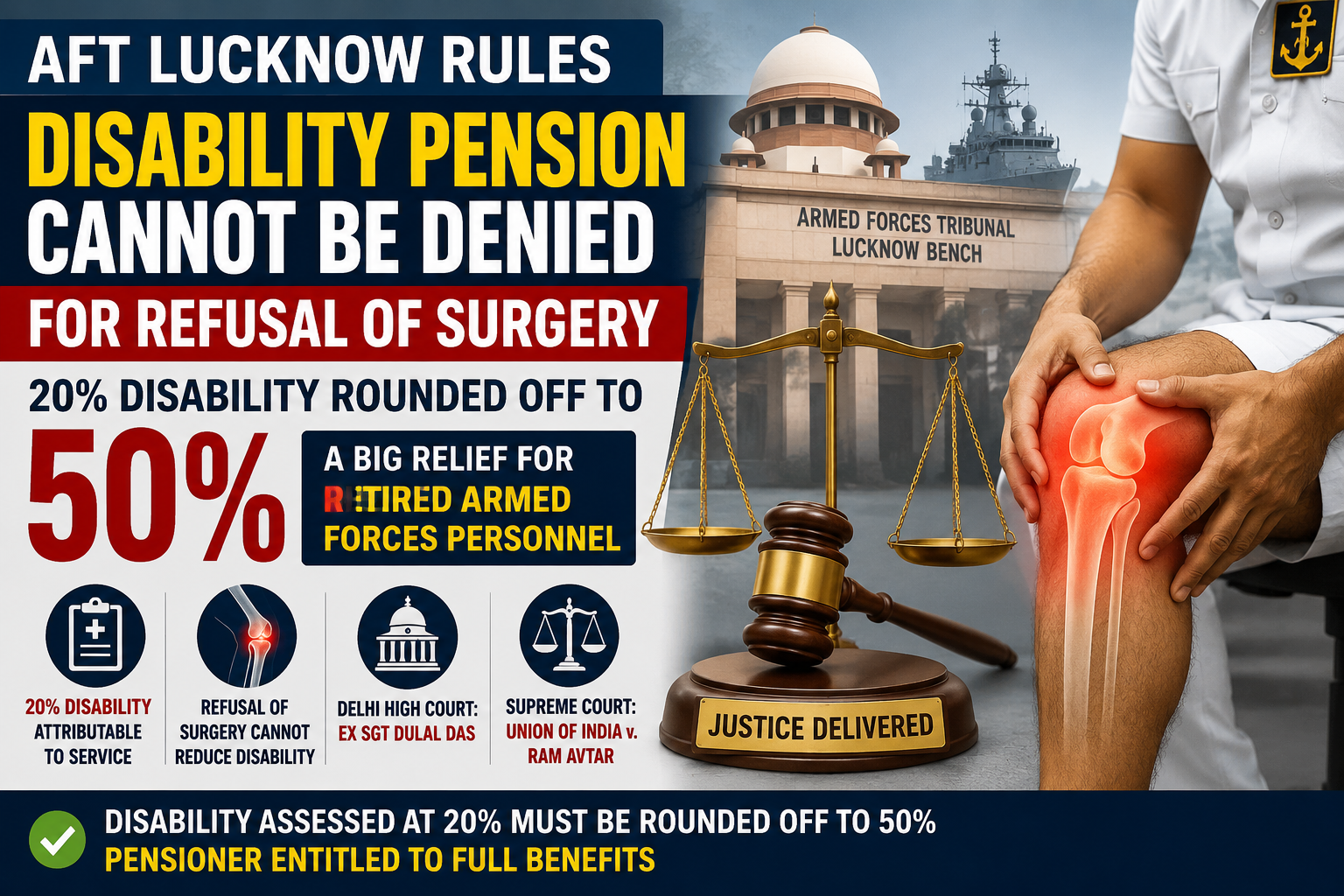
The Armed Forces Tribunal, Regional Bench, Lucknow has held that where a Release Medical Board assesses an Armed Forces personnel’s disability at 20% for life and attributable to service, the disability percentage cannot be reduced to 10% merely because the individual is unwilling to undergo surgery. Once the disability is accepted at 20%, the benefit...
Read More