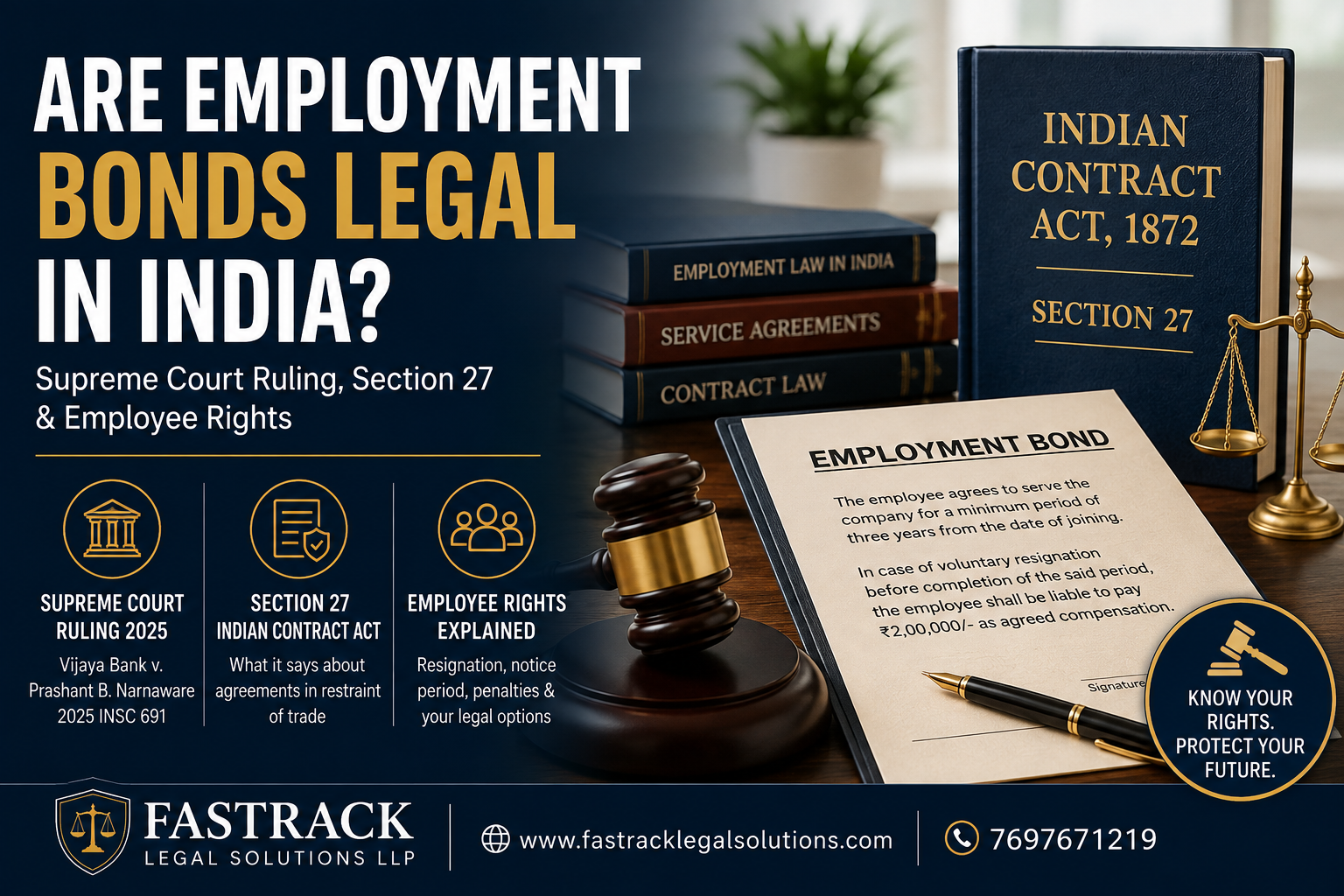
7 Essential Legal Rules for Employment Bonds in India Yes, an employment bond can be legally enforceable in India—but not every employment bond is automatically valid. The Supreme Court of India significantly clarified the law in Vijaya Bank & Anr. v. Prashant B. Narnaware, 2025 INSC 691, where it upheld a contractual condition requiring an...
Read More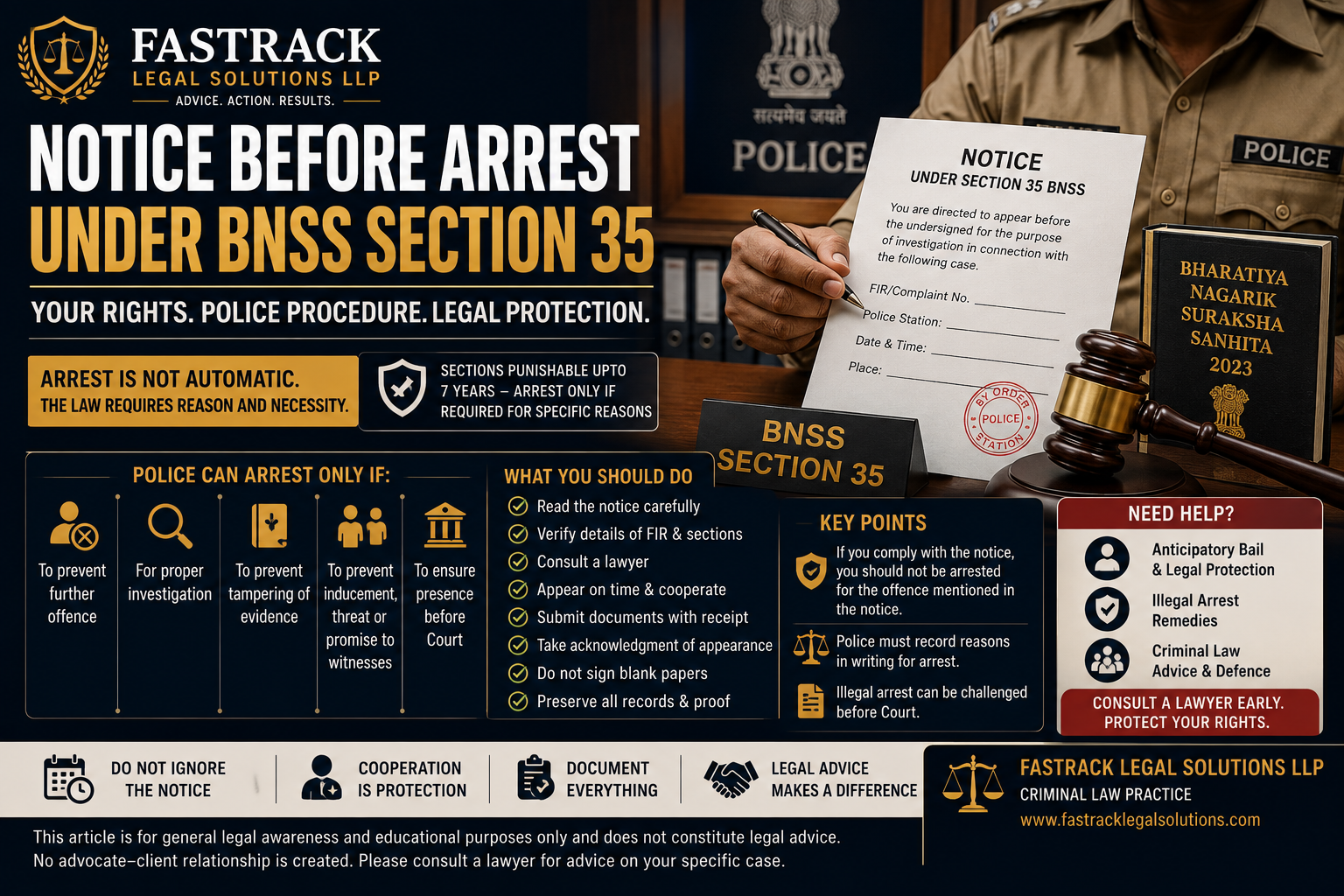
BNSS Section 35 deals with arrest without warrant and also contains the notice-before-arrest safeguard. Where arrest is not required in a cognizable offence, the police officer must issue a notice directing the person to appear before him or at a specified place. If the person complies and continues to comply with the notice, he should...
Read More
Malviya Nagar • Divorce & Family Court Guide 2026 Divorce in Malviya Nagar, Delhi: Mutual Consent, Contested Divorce, Maintenance, Custody & Saket Family Court Guide 2026 A comprehensive local guide to divorce options, Saket Family Court jurisdiction, mutual-consent settlement, contested divorce, maintenance, child custody, domestic-violence overlap, evidence, mediation and filing preparation for persons connected with...
Read More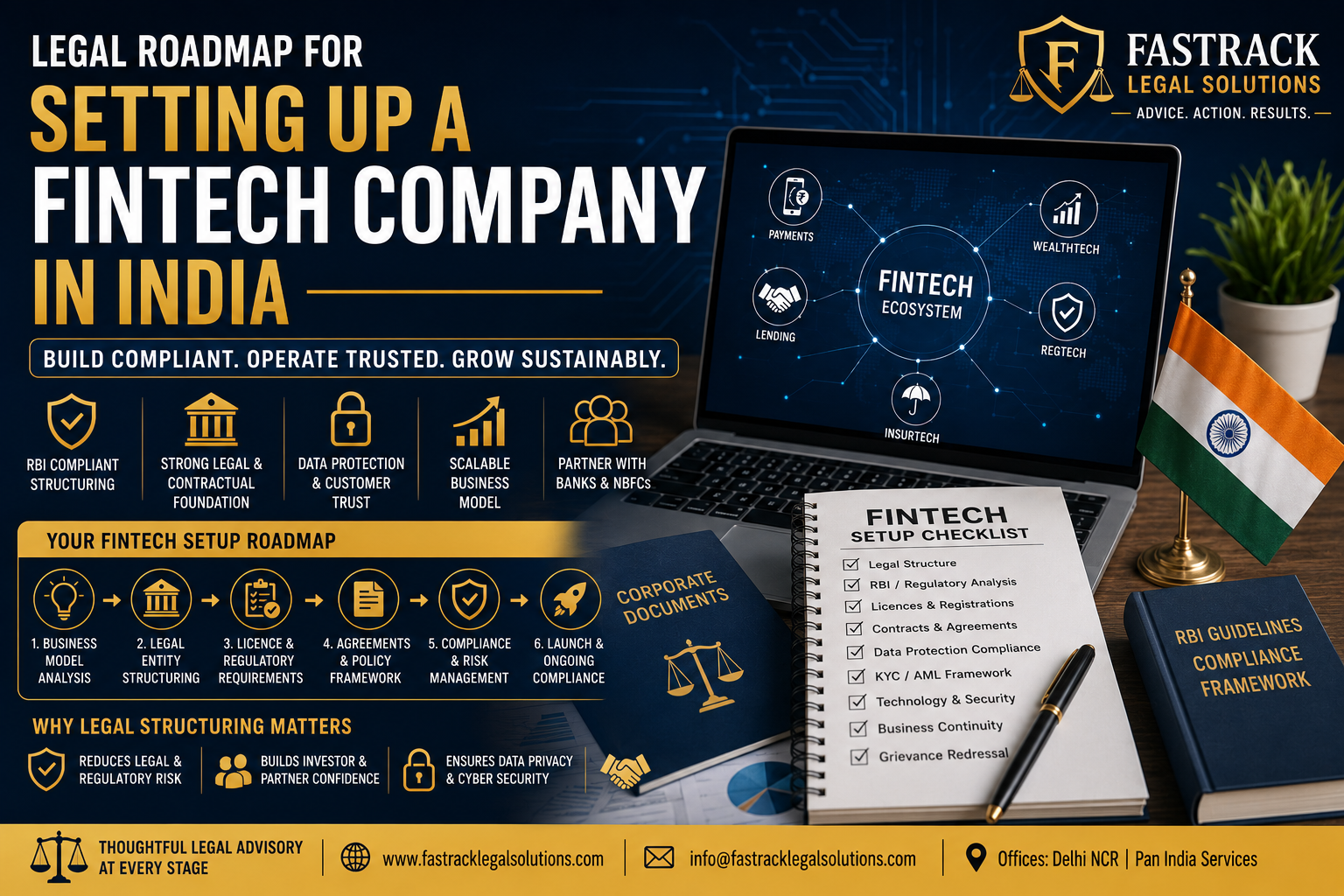
Setting up a fintech company in India requires first identifying the business model because fintech is not one single licence. A fintech may operate as a technology service provider, Lending Service Provider, digital lending platform, payment aggregator, payment gateway, prepaid instrument issuer, account aggregator, credit marketplace, wealth-tech platform, insurtech, regtech or embedded-finance platform. The legal...
Read More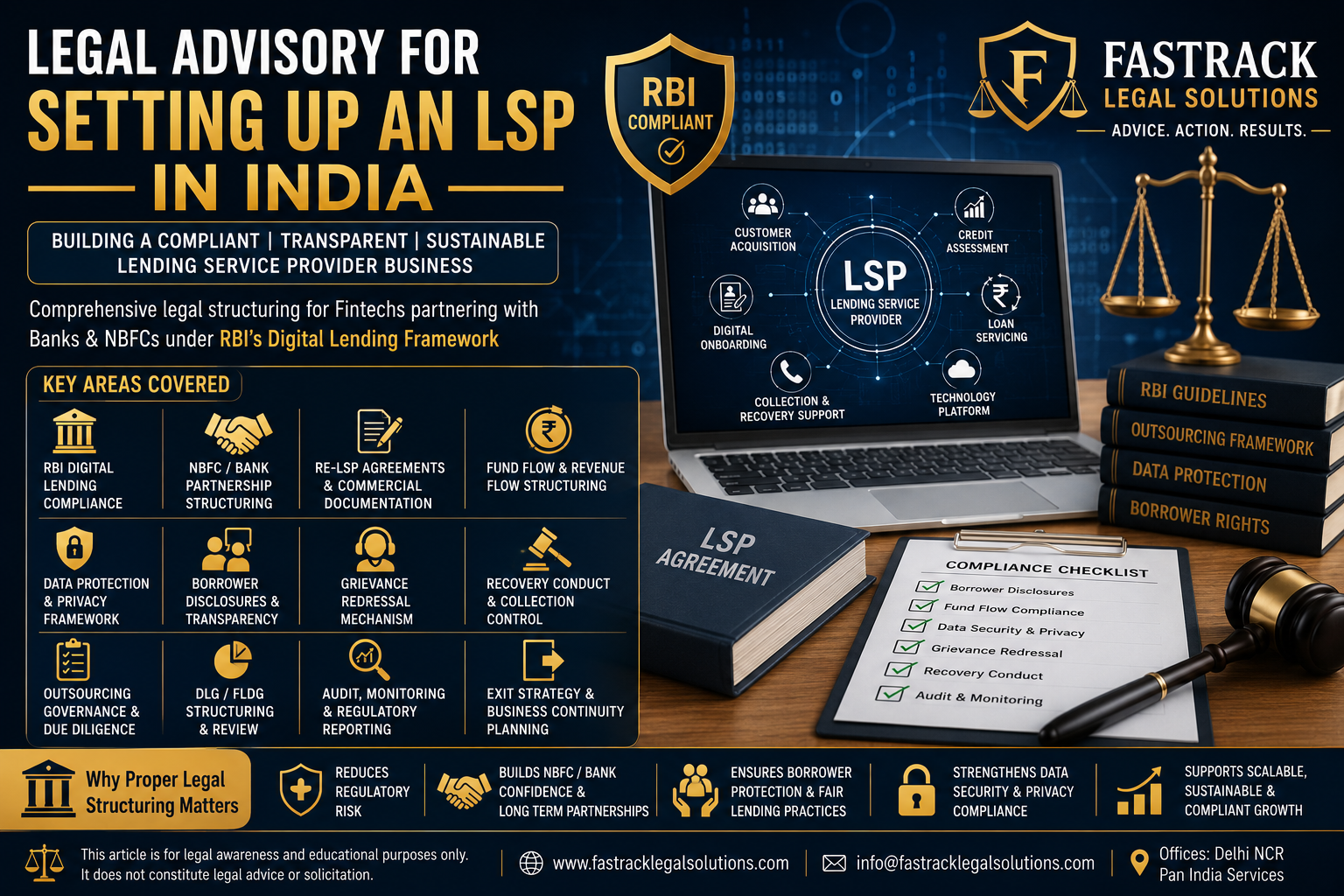
A Lending Service Provider, or LSP, in digital lending is generally treated as an agent of the Regulated Entity when it performs lender functions such as customer acquisition, underwriting support, pricing support, servicing, monitoring or recovery on behalf of a bank or NBFC. Even if the agreement between the Regulated Entity and the LSP describes...
Read More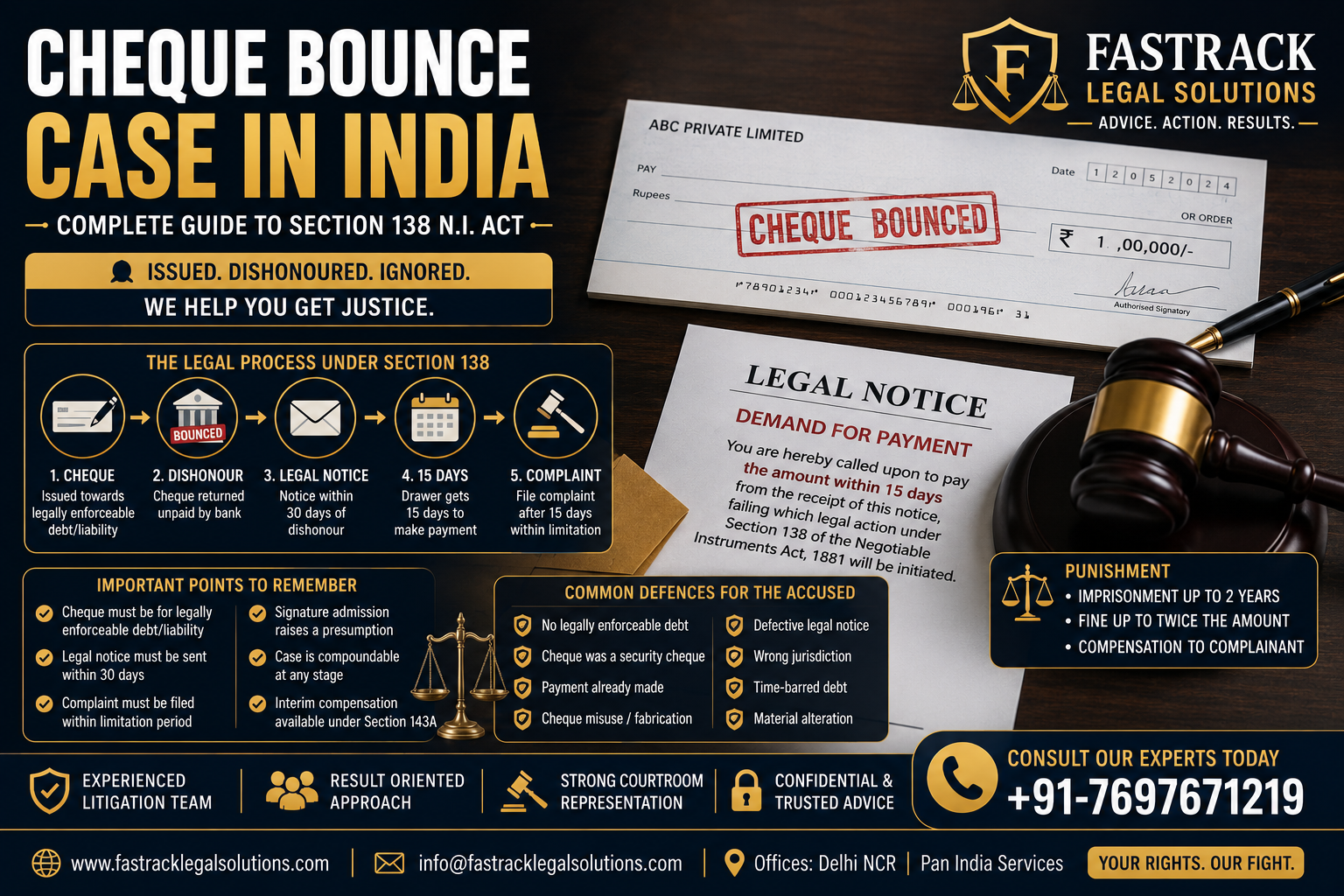
A cheque bounce case in India is generally filed under Section 138 of the Negotiable Instruments Act, 1881 when a cheque issued towards a legally enforceable debt or liability is dishonoured due to insufficiency of funds, exceeds arrangement, account closure, payment stopped or other legally recognised reasons. The payee must issue a written demand notice...
Read More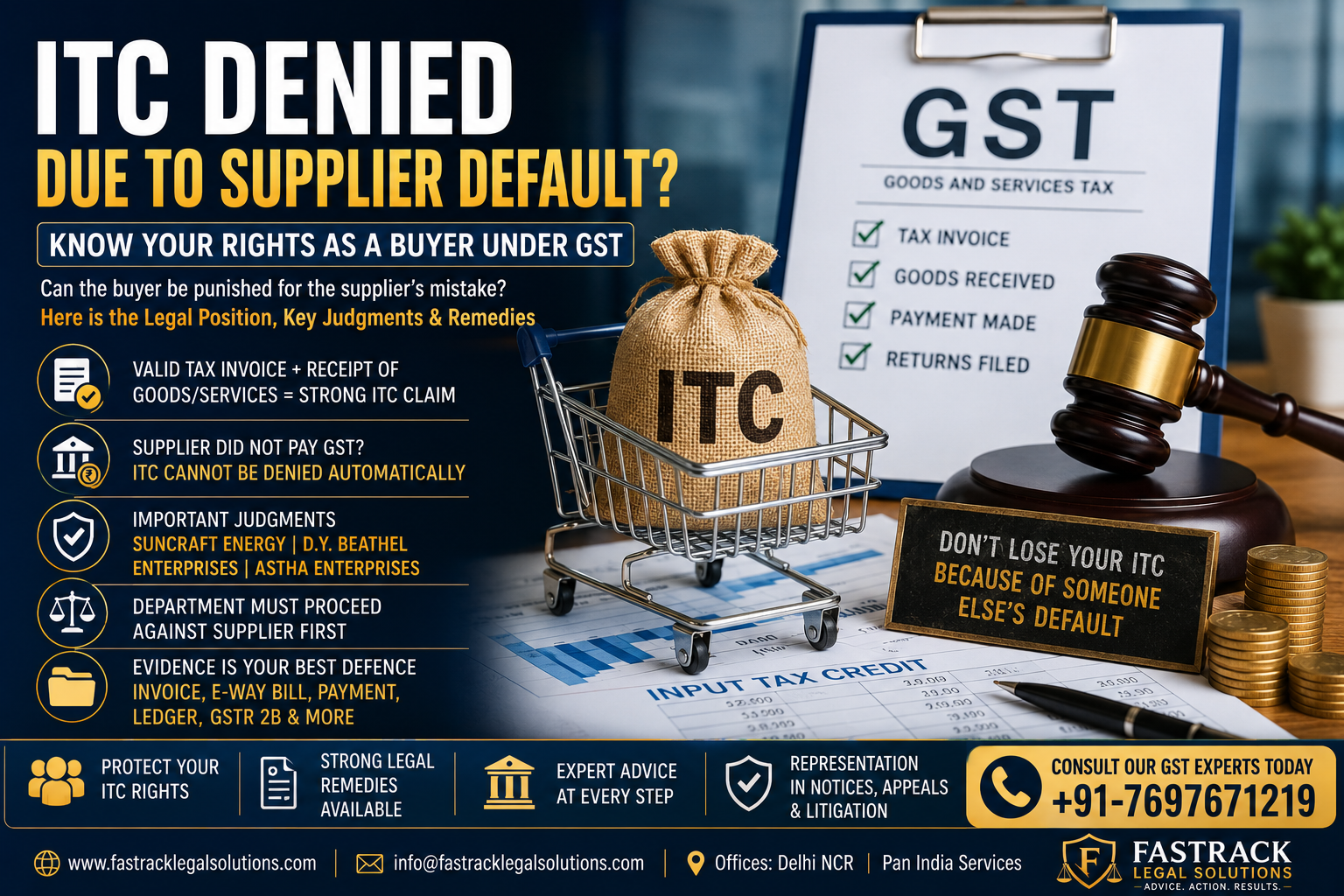
ITC DENIED -Input Tax Credit cannot be denied mechanically to a bona fide buyer merely because the supplier failed to pay GST or failed to reflect invoices in GSTR-1/GSTR-2A, if the buyer has fulfilled statutory conditions such as possession of tax invoice, receipt of goods or services, payment to supplier through banking channels, filing of...
Read More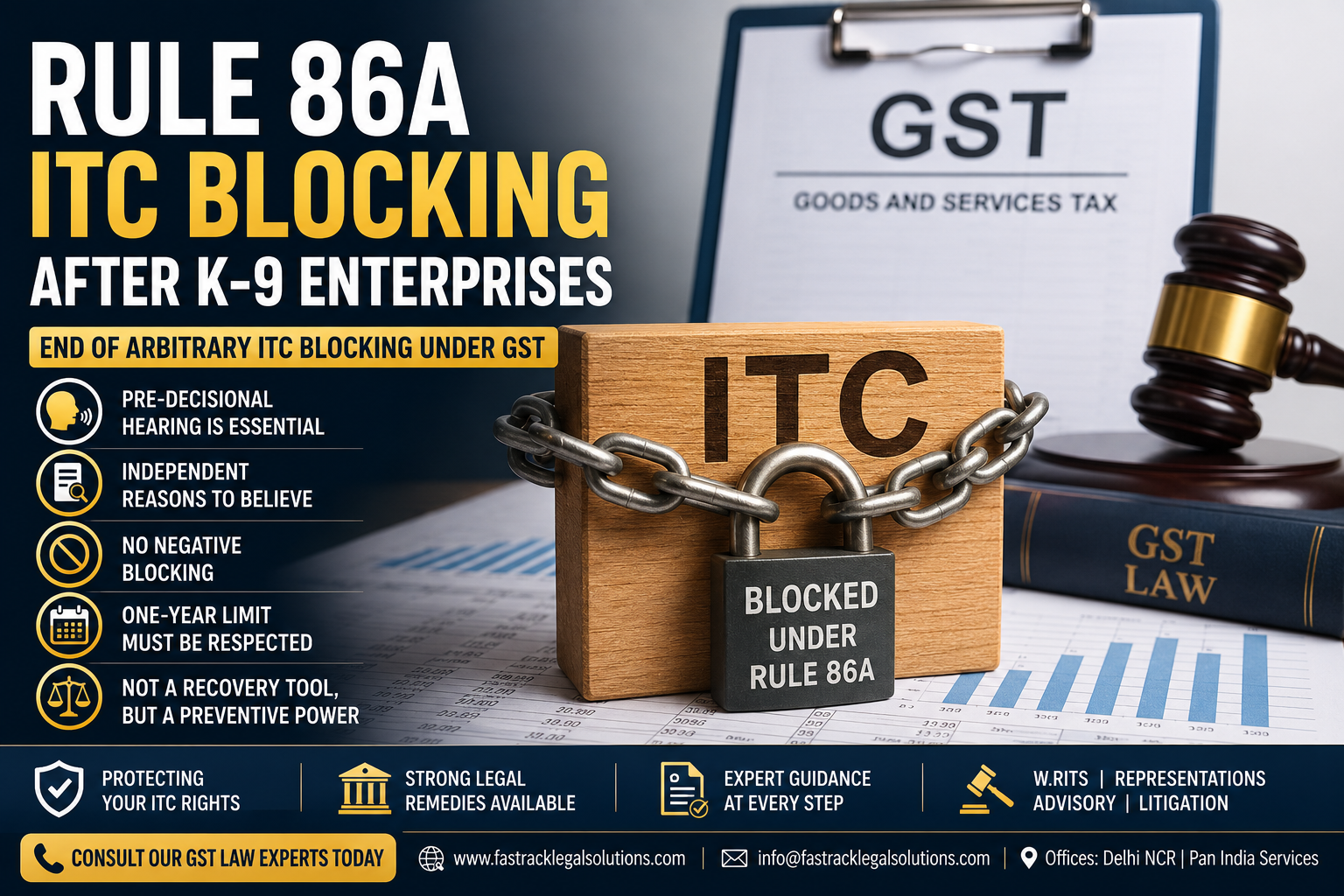
Rule 86A ITC Blocking After the K-9 Enterprises line of cases, GST authorities cannot mechanically block Input Tax Credit under Rule 86A of the CGST Rules. Rule 86A is a drastic preventive power and must be exercised only after the proper officer forms independent “reasons to believe” on the basis of relevant material. Courts have...
Read More
Armed Forces Pension Law · Medical Boards · Broad-Banding · AFT Disability Pension for Armed Forces: Eligibility, Medical Board, Reassessment, Broad-Banding & AFT Appeal 2026 A practical legal guide to disability-pension entitlement, NANA findings, attributable/aggravated disabilities, reassessment and resurvey medical boards, broad-banding, arrears and Armed Forces Tribunal remedies. Legal position at a glance: Disability-pension entitlement...
Read More
A GPA property in Malviya Nagar or South Delhi should not be treated as full ownership merely because the seller holds a General Power of Attorney, Agreement to Sell, Will, receipt or possession letter. The Supreme Court has repeatedly held that immovable property is legally transferred only through a registered conveyance/sale deed, and that GPA/Agreement...
Read More