
In Union of India through its Secretary v. Sgt Girish Kumar and Others, 2026 INSC 149, decided on 12 February 2026, the Supreme Court held that arrears arising from broad-banding of disability pension cannot be restricted to only three years before filing an Original Application before the Armed Forces Tribunal. The Court held that disability...
Read More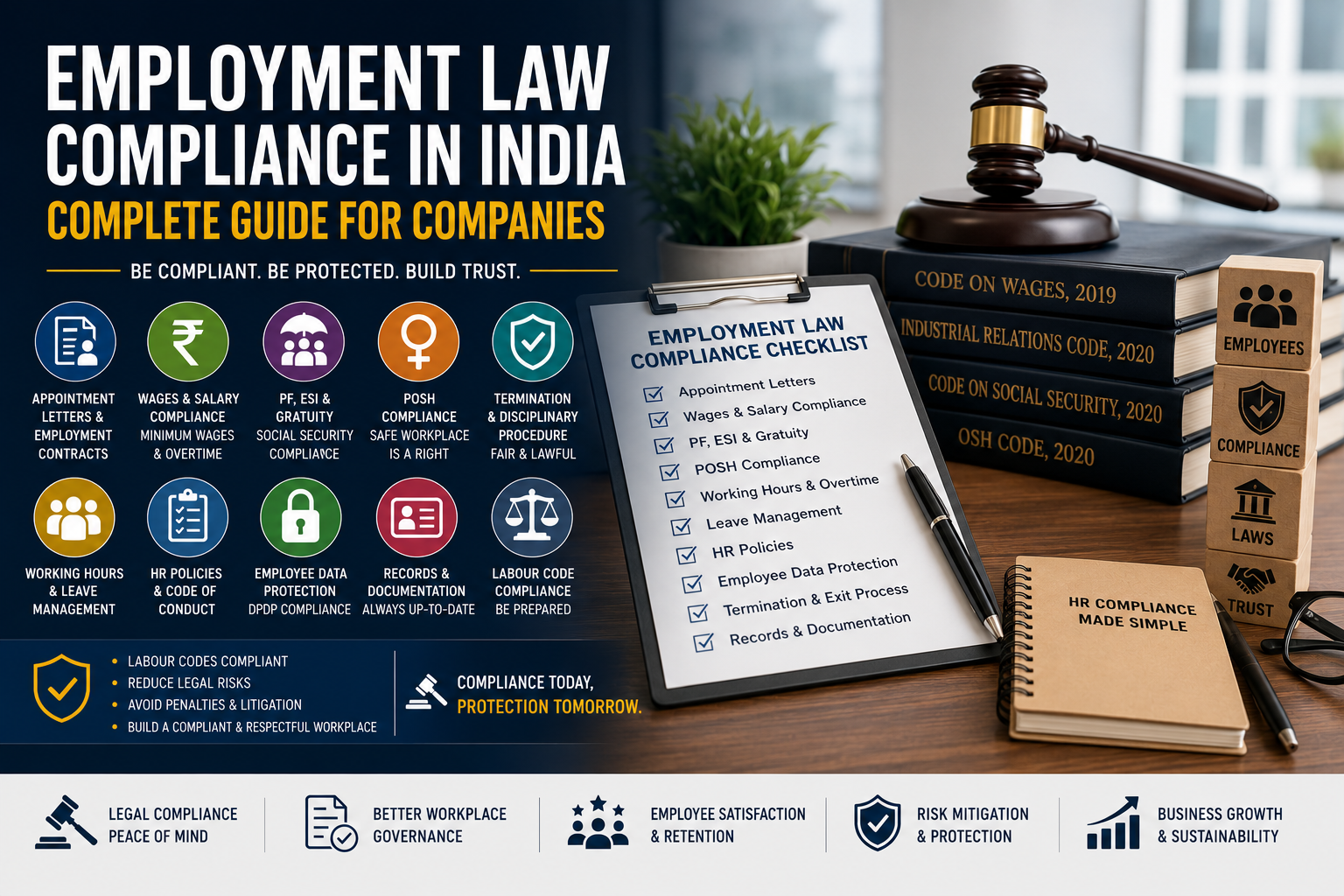
Employment law compliance in India requires employers to maintain lawful employment documentation, issue appointment letters, pay wages within statutory timelines, comply with minimum wage and overtime rules, maintain payroll and attendance records, follow PF/ESI/gratuity obligations where applicable, implement POSH compliance, regulate working conditions, protect employee data, and follow lawful procedures for termination, resignation and full-and-final...
Read More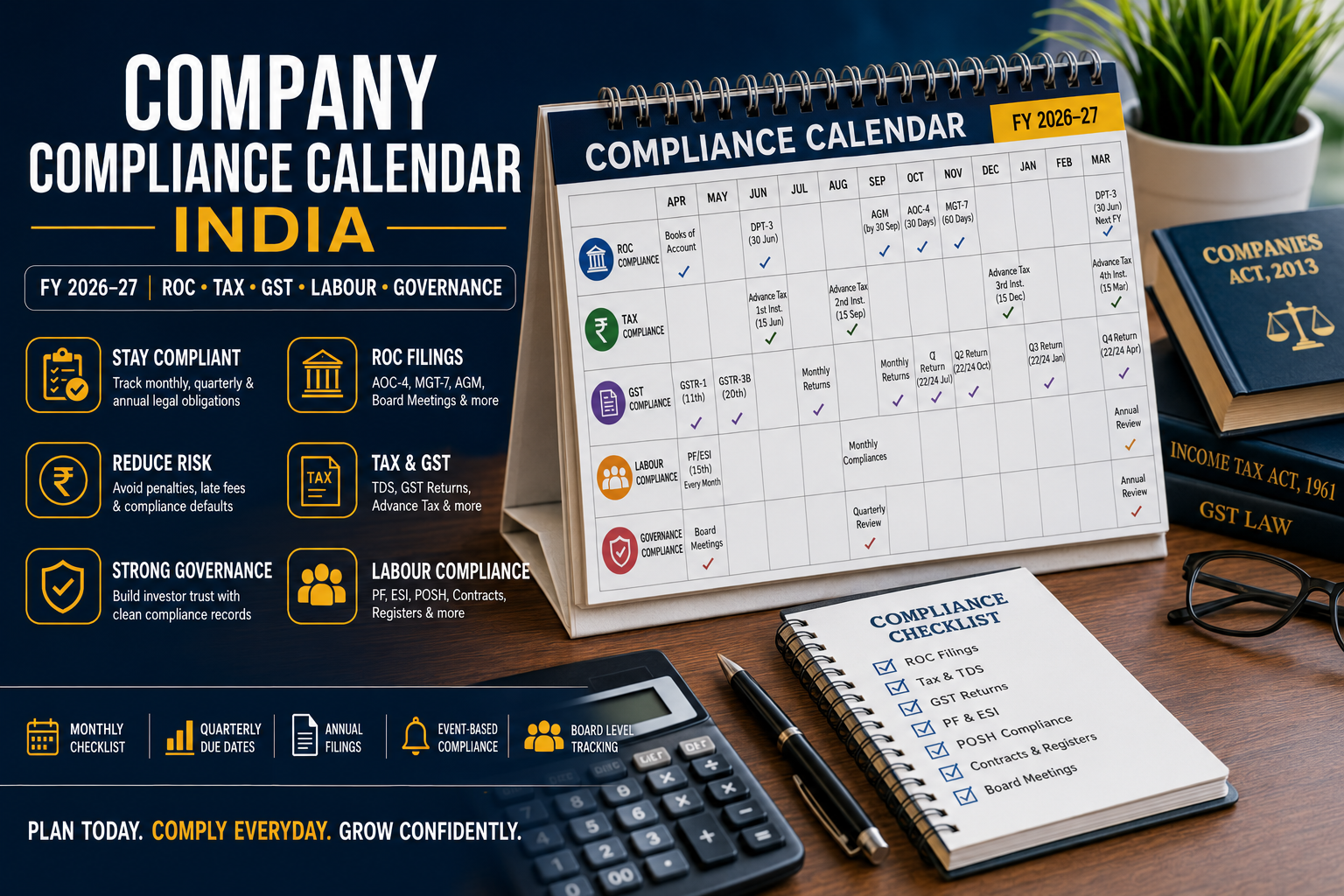
A company compliance calendar in India is a structured yearly, quarterly and monthly tracker of statutory obligations applicable to a company. For a private limited company or startup, it generally covers ROC filings, board meetings, annual general meeting, financial statements, annual return, GST returns, TDS, PF, ESI, labour records, POSH compliance, data protection review, contract...
Read More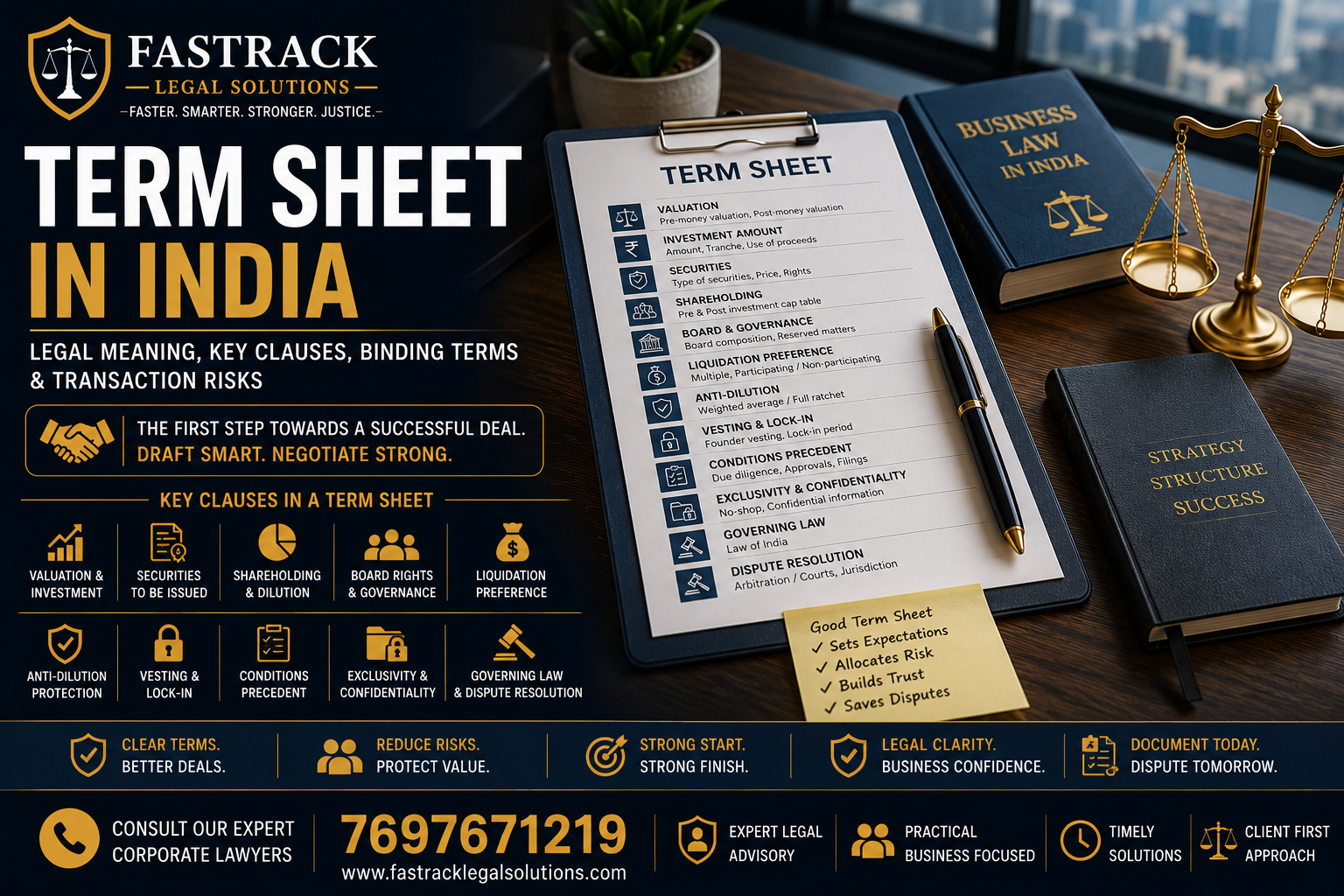
A term sheet in India is a preliminary transaction document that records the principal commercial and legal terms of a proposed investment, acquisition, merger, joint venture, loan or strategic transaction. It may be wholly non-binding, partly binding, or binding, depending on its language. Commercial terms such as valuation and proposed investment are usually made non-binding,...
Read More
Business contracts in India are legally enforceable when they satisfy the requirements of the Indian Contract Act, 1872: free consent, competent parties, lawful consideration, lawful object and absence of any legal declaration making the agreement void. A strong business contract should clearly define scope of work, payment terms, delivery obligations, warranties, indemnity, limitation of liability,...
Read More
Director liability in India arises when a company director breaches statutory duties, participates in default, fails to exercise due diligence, authorises unlawful transactions, makes false statements, commits fraud, or is treated as an “officer who is in default” under the Companies Act, 2013. However, a director is not automatically criminally liable merely because he holds...
Read More
Legal due diligence in India is a structured legal review of a company before an investment, acquisition, merger, loan, joint venture or strategic transaction. It examines corporate records, shareholding, statutory filings, contracts, litigation, employment compliance, tax exposure, intellectual property, data protection, licences, regulatory approvals, debt, related-party transactions and title to assets. The objective is to...
Read More
A shareholders agreement in India is a private contract between shareholders, and often the company, that regulates shareholding rights, transfer restrictions, management control, investor protection, exit rights, reserved matters, board representation and dispute resolution. The agreement should be consistent with the Companies Act, 2013 and the Articles of Association. The Supreme Court has recognised that...
Read More
A founder agreement in India is a legally binding contract between startup founders that records equity ownership, founder roles, vesting, intellectual property assignment, decision-making rights, founder exit, confidentiality, dispute resolution and consequences of misconduct or abandonment. It is generally governed by the Indian Contract Act, 1872, the Companies Act, 2013, the company’s Articles of Association...
Read More
Startup legal compliance in India begins with choosing the correct business structure, completing incorporation, maintaining statutory registers, executing founder and shareholder agreements, protecting intellectual property, complying with tax and GST law, following labour and HR requirements, and ensuring data protection compliance. Startups seeking government recognition must also examine the DPIIT recognition framework, which was revised...
Read More